While my magical and spiritual practice is primarily Celtic in nature, in my meditations I do like to incorporate practices from other cultures in my meditative exercises. Many years ago, meditation was what helped awaken my psychic and intuitive abilities, which ultimately led me to the realization that I am a witch. My earliest meditative practices included Buddhist chants, creative visualization and controlled-breathing exercises. I had used singing bowls from time to time, but only recently have I made it a regular practice. You do not have to a Buddhist or Tibetan monk to work with a singing bowl. Ignore the gatekeepers who say otherwise. It is problematic for Western people to pick and choose the elements of Eastern culture that may appeal to them, while often continuing to act from a place of prejudice and internalized racism toward those same cultures. However, if you truly appreciate the people and cultures that singing bowls come from, and have an understanding of how they work, then you can use them with a clear conscience.
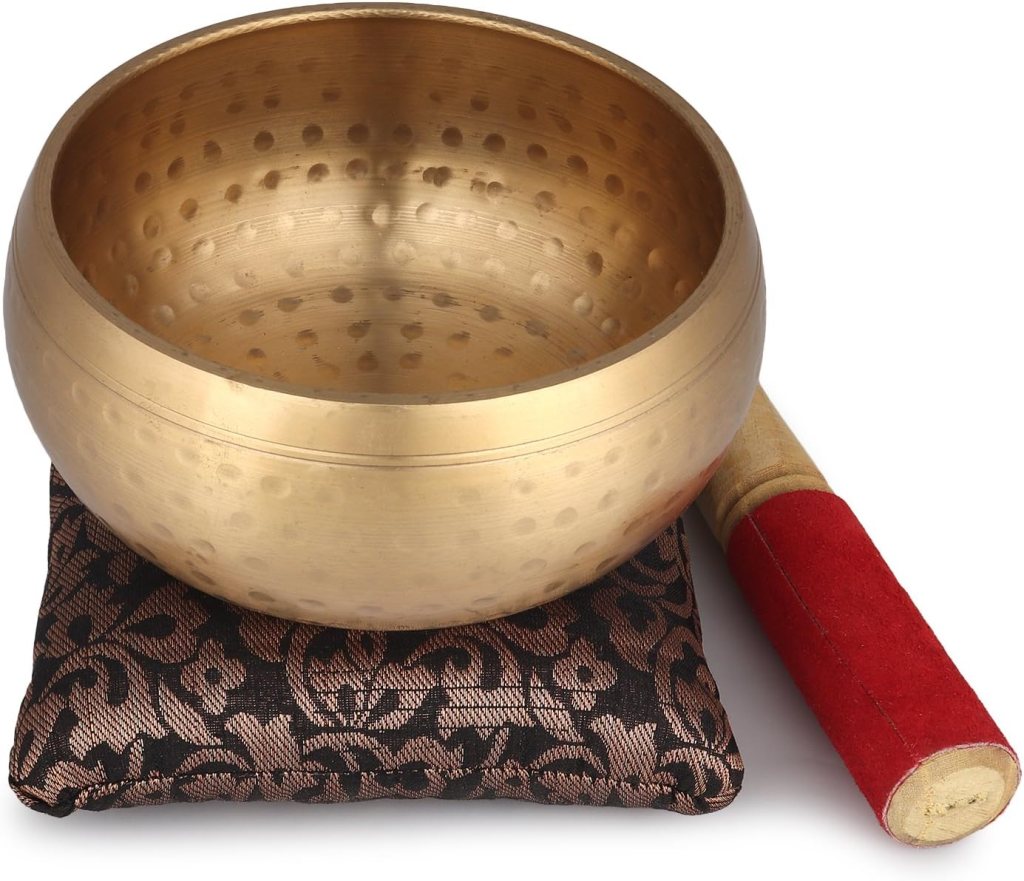
Singing bowls are examples of Idiophones. These are musical instruments that produce sounds through vibration, when they are struck, shaken, or scraped. The singing bowl is made of metal, or a combination of metals, and is most often used used in spiritual settings. When struck with a mallet, it produces sounds that aid in meditation. Singing bowls are often used in Sound Therapy to induce healing and treat various illnesses. The sounds of the bowl create energy waves that help to realign the aura and the Chakras. It is believed that the tones from the singing bowl cause the left and right sides of the brain to synchronize together, and bring the brain into a relaxed, Alpha state. Taking deep breaths while using the bowl and concentrating on the tone helps this process. There are some studies that suggest how using a singing bowl interacts with the water in our bodies. The singing bowl is linked to the elements of Air and Water. Air, because of the sound it produces reaching the ear, and Water, because of the bowl being a sort of container, not only of water but of energy that affects the water in our bodies.
Singing bowls originated in Mesopotamia over 5,000 years ago, and made their way to the regions of Tibet, Nepal and India which all have singing bowls in their history and culture dating back some 2,000 years. Today, singing bowls are still produced in these areas of the world, and both the craftsmanship and the spiritual components are closely tied to culture and tradition. Originally made of pure copper, they are now made mostly of bronze (a combination of copper, tin and zinc) or a seven-metal medley of copper, tin, zinc, iron, lead, gold and silver—seven earth metals for the seven Chakras.
To use a singing bowl, hold it gently in the open palm of your hand. Do not place your fingers around the sides of the bowl or it will affect the sounds created. Some bowls come with a small “pillow” to place the bowl on. Use the mallet to strike the bowl on the outside, and/or to gently trace the outer edge of the bowl, which will create a singing-like effect. It will take a little practice, but with a few tries it becomes easier. An important aspect of this practice is the mindset of the practitioner. While using the bowl, it is advisable to take several deep breaths and allow the sounds of the bowl to take you into a deeper meditative state.
 Rick S. Potter