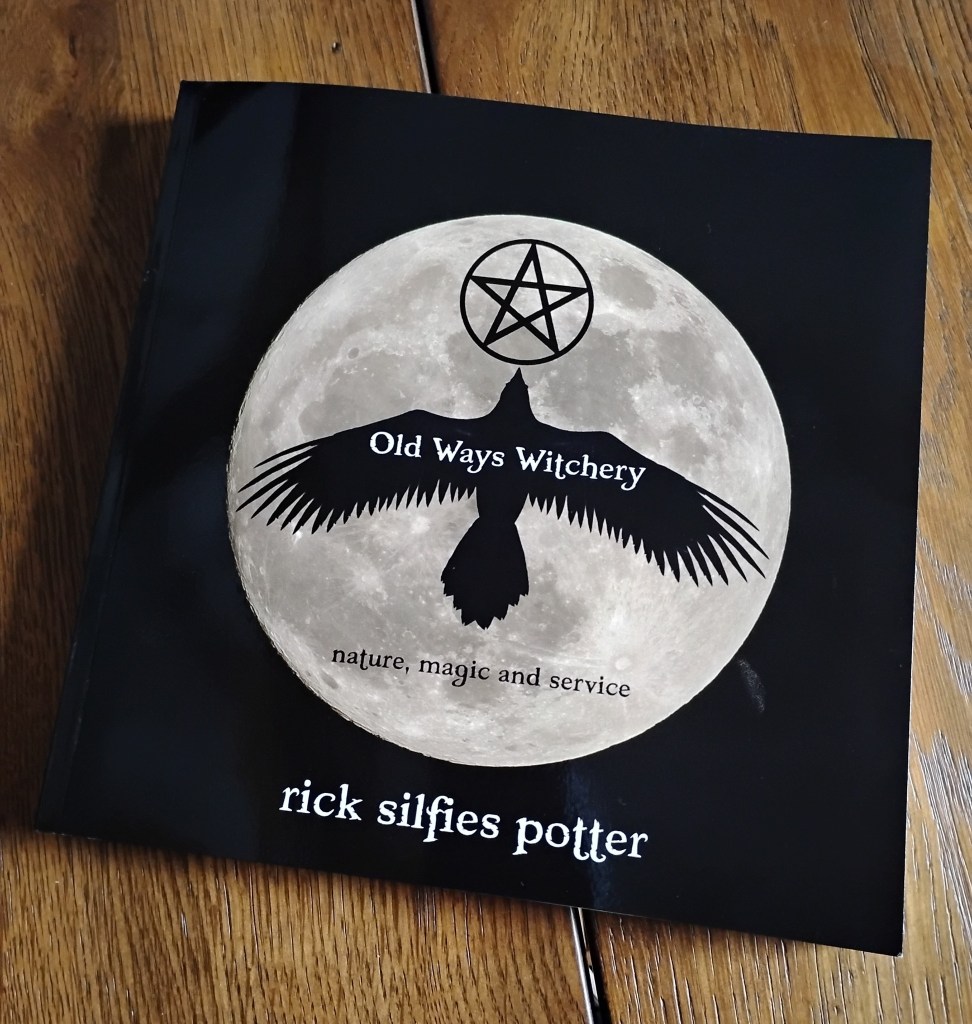
New Book Release: Old Ways Witchery

My latest book, “Old Ways Witchery: Nature, Magic and Service” contains the twelve monthly lessons that I have shared with private students for over a decade. Each lesson focuses on specific plants, stones and deity figures from the Irish, Scottish and Welsh pantheons. Also in each lesson you will find information on European folk magic, divination, spellcasting, druid philosophy and many other topics. The entire book contains wisdom I have gained from my own studies and meditations, and from teachers that I have had the privilege of meeting and studying with personally. Each lesson takes one month to complete, and includes homework and practical application. This book contains my own practice, and is presented exactly the way I practice it. I call it a “tradition”, as it is something I have passed on to my own students, but anyone can incorporate these lessons into their own practice. Each lesson is devoted to one month, beginning with March. My private lessons usually begin at this time, but those who have the book can begin at any time. It did take me quite awhile to format all of my lessons into one book. Time was scarce, as I still work a full-time job in the city and commute every day to the mountains where I live. Weekends are my writing times, since during the week I’m much too exhausted.

My definition of Old Ways includes beliefs and practices that pre-date modern magical systems such as Wicca. I present a blend of Witchcraft, Celtic Paganism, Druid Philosophy, Folk Magic, Occult Wisdom and other esoteric knowledge that has been passed down through the centuries. This may differ from other Old Ways traditions that have their own practices and rituals. Although the Old Ways themselves are not rooted in any one culture, they can have cultural elements. For instance, there are Italian Old Ways, Greek Old Ways and Celtic Old Ways. All of these pre-date modern magical practices. My practice happens to focus on the Celtic pantheon, with it’s associated imagery and lore.

Old Ways Witchery: Nature, Magic and Service is presented as a structured, monthly practice in twelve lessons. Get your copy now at this link.

The Ancient Art of Cord Magic

Cord Magic, or what some refer to as a “Witch’s Ladder”, is a very old practice of witchcraft that consists of knotted cords. As each knot is tied into the cord, an incantation is spoken to seal the spell into the cord. Many witches will tie feathers, bones, charms or magical trinkets into the knots. At the tying of the last knot, all the energy is directed into the cord and it’s knots. The power has been raised and is now stored in these knots in the cord. Different traditions of witchcraft use varying numbers of knots, and for various kinds of magic. Cords are usually made of string, yarn, twine, and sometimes animal or human hair. The oldest documented witch’s ladder was recorded in the year 1878, when one was found in a hidden room of an old house in Shropshire, England. It had been knotted with black hen feathers and was believed to have been used with malevolent intentions. Further investigations found that this was a common practice among local witches. As a reminder, witchcraft is neutral, being neither good nor evil, and it is the intention of the witch that is key. In this tradition of Old Ways Witchery, we use the witch’s ladder for healing, protection and other beneficial purposes. Evidence of sacred knotted cords exists from the Stone Age. See below the diagram of a witch’s ladder consisting of nine knots, along with an incantation for each knot. This can be applied to any spell you wish to cast. Choose the color according to your goal-example: red for relationships, green for prosperity, black for protection, white for healing. Examine your motives and intentions, as the final knot will set the spell in motion. Place the completed cord where it will not be disturbed.

You will notice in the preceding diagram that the knots are not tied in a straight line down the cord. The first knot is tied at one end, the second knot at the other, the third knot in the center, and then alternately according to the diagram below until the last knot is tied. In many witch shops you may see witch’s ladders that have crystals, plants and other items knotted within the cord. These are all quite beautiful and effective, however, in our tradition of Old Ways Witchery, simple knots with incantations are all that is necessary.

Snowflake Obsidian

An aptly named stone to wear during the winter months, Snowflake Obsidian brings balance to the body, mind and spirit. It helps to keep us centered and focused in chaotic situations. Obsidian is often used for healing and releasing energy blockages, and works quickly to move truths to the surface so they can be resolved. This stone is associated with detoxification or purification. Detoxification refers to the removal of toxic substances from both body and spirit. Alternative healing practitioners have used snowflake obsidian to purify the body by eliminating certain viral and bacterial infections. It is also being used to address complications related to blood circulation. It is believed that wearing jewelry with snowflake obsidian will help diminish muscle pains and cramps. It eases pain in the digestive system, and helps to reveal unhealthy patterns of behavior. Owners of snowflake obsidian have claimed that it lends a calming effect in the midst of turbulent circumstances. It helps one generate stability in times of uncertainty. Tension caused by stress is curbed by positioning the Snowflake Obsidian stone between the thumb and index finger. It strikes a balance in one’s body and mind, thereby easing confusion and bringing focus. During the month of December, wear snowflake obsidian jewelry or carry the stone with you. When meditating, lie down and place the stone on your heart area. Place your hands over the stone and say, “I charge this stone to bring healing and restoration”. Close your eyes, bring yourself into a meditative state, then allow the stone do it’s healing work. Take note of any personal issues that come to your mind as you meditate with the stone. Use in spells for balance, healing, and the revealing of truth.

Magic of the In-Between

There are certain times of the day and night, certain times of the year, certain celestial events, and certain places that carry their own special magic. Those who are sensitive can feel the energies that exist in these liminal spaces, and work their magic accordingly. When we find ourselves in these “in-between” places, we are neither in one place or the other, and we stand on a threshold in a place of separateness. Within these spaces, anything is possible for the skilled magical practitioner.

Dusk and Dawn: During these times, it is neither day nor night, and the energy feels almost electric. Dusk is a perfect time for magic that removes something harmful, while Dawn is good for magic that involves healing and illumination.

Midnight: As night shifts into early morning, it is a time to release whatever does not serve your highest good.

Noon: At midday when the Sun is at it’s peak, it is a great time for deity worship, and for setting in motion those spells that involve dreams, goals and desires.

Witching Hours: Between 3am-5am when most people are sleeping, interference in the astral realms are at their lowest ebb. This means your spells and magical workings can flow unhindered and uninterrupted by the usual chaotic energies that exist during busy daytime hours.

Full Moon: While a true Full Moon only lasts for an instant, the moon will appear full for a period of two to three days before and after the actual Full Moon. Use this energy for spell workings that bring beneficial things into your life, such as healing and prosperity.

Dark of the Moon: This is an often overlooked period that occurs during the two to three days before a “New Moon”. The moon appears completely dark during this time, and the waxing crescent has not yet become visible. Magic during the Dark of the Moon is focused on introspective work, banishing and binding, and removing things that are harmful from your life.

New Moon: The actual New Moon occurs very quickly, but takes place when the Dark of the Moon has ended. This is a time for magic involving new projects and setting new ideas into motion.

Lunar Eclipse: This occurs during a Full Moon, when the moon passes directly behind the Earth into it’s shadow. It is a time of increased awareness and growth on an inner, spiritual level.

Solar Eclipse: This occurs during the New Moon, when the Moon passes between the Sun and the Earth. It presents a powerful potential for change on an outward, visible level.

Samhain: On this the most magical of holidays, it is believed that the veil that separates the worlds of the living and the dead is at it’s thinnest, and spirits of departed loved ones can walk among us and communicate with us.

Winter Solstice: The longest night of the year is a time to acknowledge our own darker aspects, while embracing the coming light.

Spring Equinox: On this day of equal daylight and darkness, we celebrate the newness of life and the re-awakening of the earth.

Beltane: Another in-between day when the doors to the faery realm have opened, and we celebrate sexuality, passion and desire.

Summer Solstice: The longest day of the year is a time for powerful magic, harvesting herbs and plants, and celebrating friendship and fun.

Autumn Equinox: Another day of equal light and darkness, and celebrating our personal harvests. After today, the nights begin to grow longer and we enter the dark half of the year.

Beach: When we stand on the beach by the water, we stand on the literal boundary of Land, Sea and Sky.

Thresholds: Doorways, windows and gates are places that exist “in-between” and represent liminality, places that exist “neither here nor there”. They provide safety and protection, and there are spells that involve using a doorway or a window.

Edge of the Forest: There is a special kind of energy at the forest’s edge. As we walk into the woods, it is as though we enter another world. Suddenly we are surrounded by nature, trees and wildlife. The energy feels primal and ancient, and the spirits of the land are strongly present.

Crossroads: There are many spells that involve burying items or leaving offerings at a crossroads.

Natural Portals: The landscape often provides natural portals. Bushes, branches and trees can form a “doorways” or a passages that one can walk through. We have several such portals on our property that are frequently used by the local wildlife.

Hearth: This liminal place exists within the home. It is a place of warmth, family and magic. A cauldron in the hearth can be used for spell workings that bring abundance and protection for the family.

Witches’ Circle: The witches’ circle is a ‘world between worlds’, keeping out what is harmful and keeping in what is needed for successful magical workings.

Graveyards: Another liminal place where we can honor the departed dead, particularly during Samhain and the Day of the Dead.

Each of these ‘in-between’ places have their own magical energy that we can tap into. Can you think of any others?
Potions and Powders

Potions

A potion is any mixture of natural substances that are used for a magical purpose. They can be water based, alcohol based, oil based or dry powder based. Potions are not always necessarily something you consume. Potions that you drink are also known as tinctures or brews. Be sure to mark potions that are for drinking. Liquid potions that are not to be consumed are used topically, preserved with sea salt, and can be used to anoint magical tools. Dry potions containing non-toxic materials can be burned as incense, or sprinkled on people, around the perimeter of the home, around the flame or rubbed on a candle, or dusted over the magical working area. Items placed in potions include the following:

  • Plant Matter: Leaves, Stems, Flowers, Roots, Resins and Bark.
  • Mineral Matter: Metals, Chemicals, Crystals.
  • Animal Matter: Hair, Nails, Bones, Teeth.

Ancestor Summoning Potion

    For burning or sprinkling, use equal parts of the following:

    • Dragon’s Blood Powder
    • Red Sandalwood Powder
    • Pumpkin Powder
    • Wormwood

      Mix together by hand, adding small pieces of frankincense and myrrh resin. This potion is best used at Samhain, or during the waning to dark moon phase. It’s purpose is to summon the presence of ancestors into the magic circle. Burn as an incense, or sprinkle on the altar, or around the perimeter of the circle.

      Powders

      Magical powders are made primarily to be sprinkled, dusted or placed in shoes or specific areas to bring a desired effect. Powders are ground to a fine dust using a mortar and pestle. They can be made from several items, including the following:

      • Dried herbs, flowers and plants
      • Brick dust
      • Graveyard soil
      • Iron or copper shavings
      • Tree resins
      • Powdered crystals and stones
      • Sand

      Attraction Powder

      Equal parts of the following:

      • Damiana Leaf
      • Cinnamon
      • Basil

      Ground all ingredients together into a powder. Sprinkle on a photo, in the corners of a room, or in shoes. Rub on spell candles, or place in a small container to carry with you. This particular recipe is non-toxic and can be burned together, or sprinkled around a candle flame.

      *Some potions and powders include metals, chemicals or crystals, and are not to be burned or sprinkled on people, as they can contain highly toxic and dangerous materials. When using plant material, use caution when including those that may be poisonous. Make sure that all potions and powders are labeled as toxic or non-toxic, and are tightly sealed when not in use.

      The Witch’s Circle

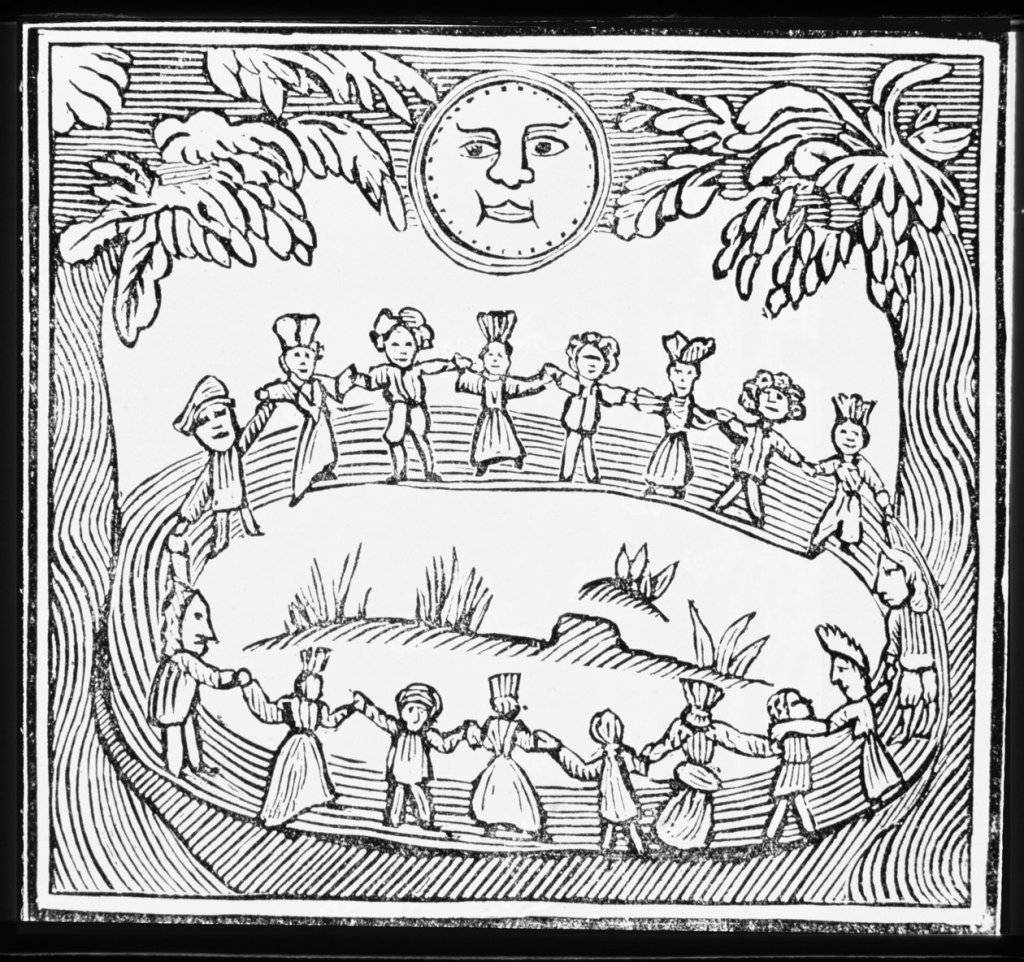
      The concept of the Witch’s Circle is not a modern invention, and is not solely a Wiccan practice. It is used by ceremonial magicians, traditional witches, and even some druid groups. Many medieval woodcuts depict witches standing in or casting a circle of protection. Famous works of art, such as the 1886 oil painting The Magic Circle by John William Waterhouse (below), depict a witch casting a circle using a sword.

      What is the Witch’s Circle?

      As witches are weavers of energy, they utilize it in many forms. The celestial energies of the stars and planets, the natural energies of stones, plants and trees, as well as the elemental energies of earth, air, fire and water all work together with the witch as companions in magic. Casting the circle creates an energetic boundary of protection around the witch, keeping in only those energies that are needed for magical workings and keeping out anything that may be harmful. The circle typically involves the use of intention, visualization and incantation. A proper circle requires strong focus and concentration, and should not be attempted in a casual or haphazard manner. Take your time and don’t rush it. It is not uncommon to sense a change in temperature or a difference in atmosphere when the circle has been cast successfully. It has been noted that often the person casting the circle will not feel any changes, but others present in the circle will notice a marked change. When casting the magic circle, some traditions begin in the north, others in the south. Practitioners may use a wand, an athame, a sword, or just the hand. Some will cast a circle with specially selected herbs or with salt. When the circle has been completed, it is not merely a circle but a sphere. The circle caster may either stand in the center and turn, or walk the perimeter of the circle. Either method will depend on available space, the location of the altar, how many people are present, or whether the ceremony is indoors or outdoors. For outdoor and public circles, I place the altar in the center and walk the perimeter of the circle. My indoor altar sits against an east facing wall, only because of space limitations. I stand in the center of the room and cast my circle to the walls. An outdoor circle can also be traced on the ground with a stang (a forked wooden staff).

      The circle is cast by walking (or turning) three circles in a clockwise direction. Various traditions have their own circle-casting incantations, but they typically go something like this:

      (Circle One) I cast this circle to protect me (us) from all harmful energies.

      (Circle Two) I cast this circle to allow only the most perfect energies for this work, and block out all other energies.

      (Circle Three) I cast this circle to be a sacred space and a world between worlds, where the highest will is sovereign.

      (This particular circle call is inspired by author/teacher Christopher Penczak, and I use it in my own circles. I have found it very effective).

      It is important to speak loudly and with authority. This isn’t a game and you’re not just saying words. We are working with energy here, bending and shaping it with our will, intent and visualization. As we walk the circle, we see it in our mind’s eye as a blue light emanating from the wand, athame or coming out of the hand. When your ceremony or ritual is complete, then you will release the circle. Some traditions use the terms “opening and closing”, but I prefer “casting and releasing”, which makes more sense to me. To release the circle, simply walk the circle in only one counter-clockwise direction and say something like “I release this circle out into the universe”. Again, various traditions will have their own incantations for circle casting and releasing, but you can certainly write your own. The main purposes for the circle are to be a boundary of protection, a container of energy, and to be a sacred space. The circle should be cast before doing any magic, rituals or ceremonies. I use the circle for any magical workings I do at the altar, including divination.

      There are many other nuances to casting the circle, indeed entire books have been written about it, but in this article I wanted to share some important considerations. This article did not address the calling of the elements, deities or directions. I wanted to focus primarily on the actual casting and releasing of the circle. For a more detailed description of circle-casting and ritual ceremony, I recommend the wonderful book, “The Outer Temple of Witchcraft: Circles, Spells and Rituals”, by Christopher Penczak.

      Medieval woodcut of witches in a circle.

      The Witch at the Edge of the Forest

      It is my belief that witches were never meant to be celebrities, “influencers”, or have thousands of “followers”. I find it disheartening to see so many people actively seeking a certain level of fame and status in the wider pagan world. This should not be the goal. Just like the historical witch at the edge of the forest, we were meant primarily to be of service to those in our local communities. That is our first priority. It all begins from there. This being said, there is good work being done by some very high-profile witches, but they did not set out to become famous. Their reputations preceded them as their work was shared by those who benefited from it. These witches remain humble and do not seek the limelight. I can count on one hand those that I would seriously recommend.

      There are several others, however, who have become popular for the wrong reasons. I will not name names, but there are some well-known witches that I have chosen not to follow. Some have made broad, sweeping statements that I simply cannot support. Some seem to direct their energies toward certain demographics and the trendy ideas they cling to. They love attention and are fixated on clicks, likes and reviews. They take notice when they are muted or unfollowed. Does it really matter? Be wary of pagans and witches who are always talking about themselves and rarely about the work of others.

      Just because someone is popular and has a best-selling book does not mean they are a worthwhile teacher. Even books can be popular for the wrong reasons.

      There is an old saying, “Bloom where you are planted”, and there is a lot of wisdom in this. Let us offer our magical skills and gifts to our local communities, unconcerned with followers and popularity. May we be more like the witch at the edge of the forest, detached from mainstream society and yet still accessible to those who need our services.

      Blood, Saliva and Semen: Using Bodily Fluids in Witchcraft

      It has been said that if today’s so-called “modern” witches knew how witchcraft was practiced in the old days, they would probably be shocked. Many witches today would never consider using bodily fluids as a component in their magical workings. They likely view such practices as “dark” or “baneful” magic, which, of course they can be. One might even say there are times when such magic would be necessary, but that is a different article altogether.

      When used in an ethical and responsible manner, introducing body fluids into your spellwork adds a massive boost of power to your magic. It is nothing to be fearful of as long as your intentions are benevolent ones. Bodily fluids have been used in witchcraft for centuries. It is not a new concept, but it is not widely embraced in the modern pagan and witch communities. In this article, we will look at the three primary fluids: blood, saliva and semen.

      Blood

      Blood is believed to carry our life force. Blood can be used to consecrate ritual tools or magical objects. It can be used to forge a magical bond between people, or between people and familiar spirits. In our tradition of Old Ways Witchery, three drops of blood are placed into the wooden wands we make for ourselves every Spring. I know of another tradition in which a few drops of blood are mixed with chlorophyll, and then poured around the base of a plant. This forges a connection between the witch and the plant. Chlorophyll (not to be confused with chloroform) is basically “plant blood” and is widely available. Blood is symbolic of life and the connection to one’s ancestors, and to humanity. Using blood in a magical working calls upon these symbolic meanings. Blood can be used to evoke the spirits of the departed dead, to seek their wisdom, guidance and presence. Presenting a few drops of your blood as an offering to deity is viewed as a form of sacrifice, and a way to gain favor and protection.

      Saliva

      Saliva is used in some forms of protection magic, as well as for healing and cleansing. Like blood, it is believed to carry your personal essence or energy. It can be used to establish authority and to magically “mark one’s territory”. Saliva can be used to seal your energy into divination tools such as tarot cards, runes or ogham staves. It is viewed as the “lubricant of life”, and can be used when making sacred agreements, or when acknowledging rites of passage. Saliva is also often used in spells to invoke love or lust, as well as in some forms of candle magic. It is a powerful ingredient in healing spells, particularly those involving the use of poppets. When constructing a healing poppet, simply include some of your saliva along with other healing ingredients on the inside of the poppet before it is sealed shut.

      Semen

      Semen is a versatile ingredient that can be used in various forms of magic. Energetically it can be used as part of a binding spell to influence someone’s actions or emotions. It is often used in sex magic, to enhance sexual attraction. Mixing semen with blood is a powerful blend that helps to “seal” a spell and sort of expedite the results more quickly. As with saliva, ritual candles can be dressed with semen to increase their power and effectiveness. Semen can be placed in magical talismans, particularly those made with clay, which will increase their potency. For those who make their own candles, semen can be added to the wax before it is poured, which will make them much more powerful. Semen is viewed as a creative force, which makes it’s use in spells and magical workings undeniably strong. Gay men in particular will find the use of semen to greatly enhance their spells and rituals.

      Using bodily fluids in witchcraft is not a universally accepted practice in all magical traditions. It involves ethical considerations related to consent and manipulation. Each witch must decide for him or herself how they will use these ingredients. Additionally, each witch must be willing to take responsibility according to his or her own personal ethics and moral standards.

      The Old Ways Witch

      There are many different types of witches in today’s modern world, from traditional to eclectic, to hedge and Wiccan witches. None of these are better or worse than another, just different. We don’t all do things the same way, but there are some common practices and beliefs held by all. The practice of witchcraft has always been referred to as “The Old Ways” and even as “The Old Religion”, although many have an aversion to that word due to it’s Christian associations. Be that as it may, witchcraft often does have a religious aspect, such as with the veneration of deity figures and the devotion that is given to them. Still, not all witches connect with deity figures, gods or goddesses. Today, witchcraft has become trendy, with everyone and their uncle claiming to be a witch (and who is to say they’re not), but the fact remains that witchcraft is not merely a hobby or something fun to do on the weekend. Add to this the fact that many are trying to oversimplify witchcraft and calling some things “witchcraft” that really are not. It is a noble idea to try and make witchcraft more appealing to modern people, but I am not convinced that it should be. Historically, witches were always on the fringe, on the outside. They weren’t celebrities or “influencers”. They kept to themselves and were both respected and feared in equal measure. I believe it is important that we return to this ideal. In today’s social media world, you do kind of have to put yourself out there, otherwise how will people know about you and the services you offer, but I try to do this in a minimal way. I have a Facebook, an Instagram and this website. I am a witch of the Old Ways, meaning that I hold to beliefs and practices that pre-date modern Wicca and other modern magical systems. Some people scoff at the expression “Old Ways”, particularly the younger witches who feel that older beliefs are irrelevant and outdated. The wisdom of the craft elders is pushed aside in favor of new and so-called “modern” ideas. While the Old Ways are not linked to any particular cultural or religious aspect, my own practice does incorporate some religious and cultural overtones. Aside from these, there are things that identify the Old Ways Witch.

      • The Plant Realm: Old Ways witches work closely with flowers, herbs and plants, forging a bond with the spirits of the plant realm. A relationship is developed between plant and witch, where the communication of magical wisdom is shared. The plants lend their energies to the witch’s spells and enchantments, and in return the witch maintains a connection with the spirit of the plant.
      • The Night: The Old Ways witch is intimately attuned to the powers of the night. All ceremonies and rituals are conducted during the night-time hours, long after the sun has set and the moon takes rulership of the sky.
      • The Moon: The Old Ways witch works predominantly with the phases of the moon rather than the sun, to attract and draw in, or to banish and repel. The hours between 3am-5am are the most auspicious times for spells and magical workings.
      • The Forest: The Old Ways witch has a strong connection to the forest and the spirits who dwell there. This includes the trees, plants and animals who inhabit the forest.
      • Sovereignty: The Old Ways witch is sovereign, meaning that he or she is not bound by the rules and laws of others, but practices by his or her own personal ethics and moral standards. Old Ways witches do not adhere to such ideas as the Wiccan Rede or the Threefold Law.
      • Magic: The Old Ways witch is a practitioner of magic, with the use of spells and enchantments, within the boundary of the magic circle. This often includes practices of folk magic that have been passed down through the ages, as well as magical systems that existed long before Wicca, such as the use of sigils and planetary forces.
      • Ancient Lore: The Old Ways witch preserves the wisdom contained within the old stories. Some Old Ways witches may be devoted to a particular deity.
      • Familiars: The Old Ways witch works closely with the spirits of animals, stones and plants.
      • Divination: The Old Ways witch is skilled in various forms of divination, which may include tarot, runes, pendulum, ogham or crystal ball. These skills are offered to those who seek guidance, or when the witch seeks insight into current events.
      • Healing: The Old Ways witch is skilled in various forms of alternative healing, which may include Reiki, crystal therapy, herbal applications or certain unconventional forms of energy healing.
      • Nature: The practices of the Old Ways witch are rooted in the mysticism of nature, the wind in the trees, the light of the moon, the majestic stag, the jumping salmon and the hoot of the owl. Nature is alive and sentient, sharing it’s wisdom only with those who have the ears to hear.
      • Spirits: The Old Ways witch communicates not only with the spirits of nature, plants, animals and stone, but also with the departed dead. Ancestors (both spiritual and familial) play a large role in the life of the Old Ways witch, sharing their wisdom and assisting with magical workings.

      These are some of the things that differentiate an Old Ways witch from other types of witches. This is my practice, though I have not shared everything here. I do not suggest that Old Ways witches are “better” than other witches, but I do maintain that older practices are still just as relevant in today’s world.

      The Void-Of-Course Moon

      It is well known that witches work with the phases of the moon when doing magic and spellwork, to attract beneficial things or to drive away what is harmful. There are books (and phone apps) that can tell us the current and future moon phases, and when the moon will inhabit a particular sign.

      But what about those times when the moon doesn’t inhabit any sign?

      This is when the moon is considered “void-of-course”. During these times, which can last for a few hours up to a large portion of the day, the moon is shifting between signs and is not firmly placed in any sign at that time. During void-of-course, the moon is not making any aspects with other planets or signs, and is not actively influencing events. I would be interested to know if there are any commonalities among those who were born when the moon was void-of-course. Ephemerides (charts which show the positions of celestial bodies) do not always display void-of-course times, so it would be beneficial for the witch to find one that does.

      In regards to magical workings, spells that are cast during these times may lack the needed energy, may be delayed or have an unexpected outcome. Any spells that are high priority should be delayed until the moon is firmly fixed in a specific sign.

      Below I have included ephemerides for the void-of-course moon from April thru December 2025.

      Plan your spells accordingly.