Deity and Devotion

I once read a Facebook post that said “Tonight we’re doing a ritual for protection. What god should we use?” This made me cringe a little, as the gods are not there to be “used”. This practitioner and others with them were planning to call on a random deity for assistance. Yes, there are deities that have protective qualities, but they are not meant to be evoked arbitrarily. Wouldn’t you rather be surrounded by those who have a genuine interest in you, instead of those you only hear from when they need something? I’m sure the deities feel the same way. Now, I know some folks have different ideas about who or what the deities are. Some just view them as archetypes, energies or thoughtforms. I happen to consider them as living, spiritual beings. I acknowledge numerous deities from the Celtic pantheon, primarily the Welsh Goddess Cerridwen. She is a Goddess of inspiration, creativity and transformation. She has a triple aspect as Witch, Goddess and Mother. I have been a devotee of Cerridwen for many years. We have a relationship. A devotee is someone who “devotes” themselves in service to another. Throughout the year, I also honor other Celtic deities in order to strengthen my relationships with them as well. They are not merely aquaintances or strangers I call upon only when I want something. We have an established connection. I have been to many rituals where a practitioner evoked a deity they only learned about hours earlier, and then expected that deity to be present and lend it’s energies to the ceremony. I can guarantee that did not happen. Eclectics might disagree, as this seems to be a common practice, however, I am not eclectic. Buffet style paganism isn’t for me, and I have always questioned it’s authenticity.

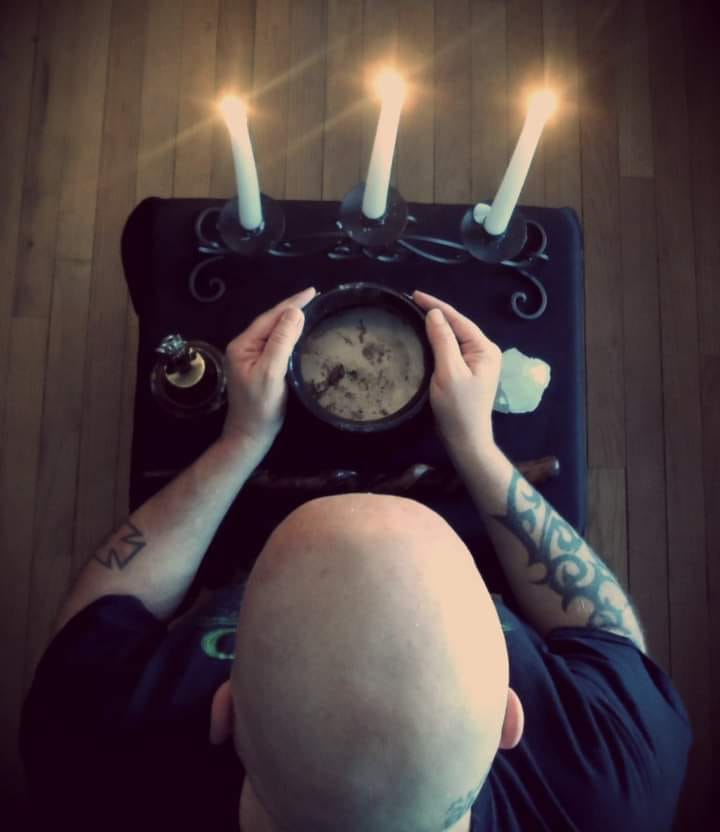
So what does it mean to be a devotee to a deity? It means spending time with that deity on a regular basis. Not just to ask for something, but get to know them, as you would learn about someone you just met. Introduce yourself, talk to them, tell them the things you admire about them. Study their lore and stories, which will give clues to their likes, dislikes and things they will respond to. Light candles for them, sing to them and burn incense as an offering. Do rituals that simply honor who they are and the things they represent. Place a statue or photo of them on your altar. When your deities see that you take them seriously, then they will do the same for you. Offerings are important. Offer to them the things they enjoy, but also offer your time and skills in service to them. Learn more about them from other devotees. For example, Cerridwen’s story is full of hidden wisdom, but I have learned a great deal more about her from other devotees who have written books about their own experiences. All of this helps to draw me closer to her. Draw close to your deities, and they will draw close to you. A relationship is a two-way street. Once that has been established then you can start asking for things.

Ideally, they should be things that deity can provide. Cerridwen is a goddess of creativity and inspiration, so I ask for those things to help in my own life situations. Other deities such as Cernunnos and the Morrigan, will assist in other areas as long as I continue my connection with them. That is how it works. If you never do anything for them, how can you expect them to do things for you? Set aside time for devotionals to your deities. Some do them every day, others will do them a few times a week, but make your devotionals a regular practice. Make time for them and they will make time for you. If you don’t have an altar, now is the time to create one. This will be your sacred space to interact with your gods and guides. They are waiting to meet you there. So please, don’t call on random deities for assistance. Develop a relationship with them first, and then they will be there for you.

New Book Release: Old Ways Witchery

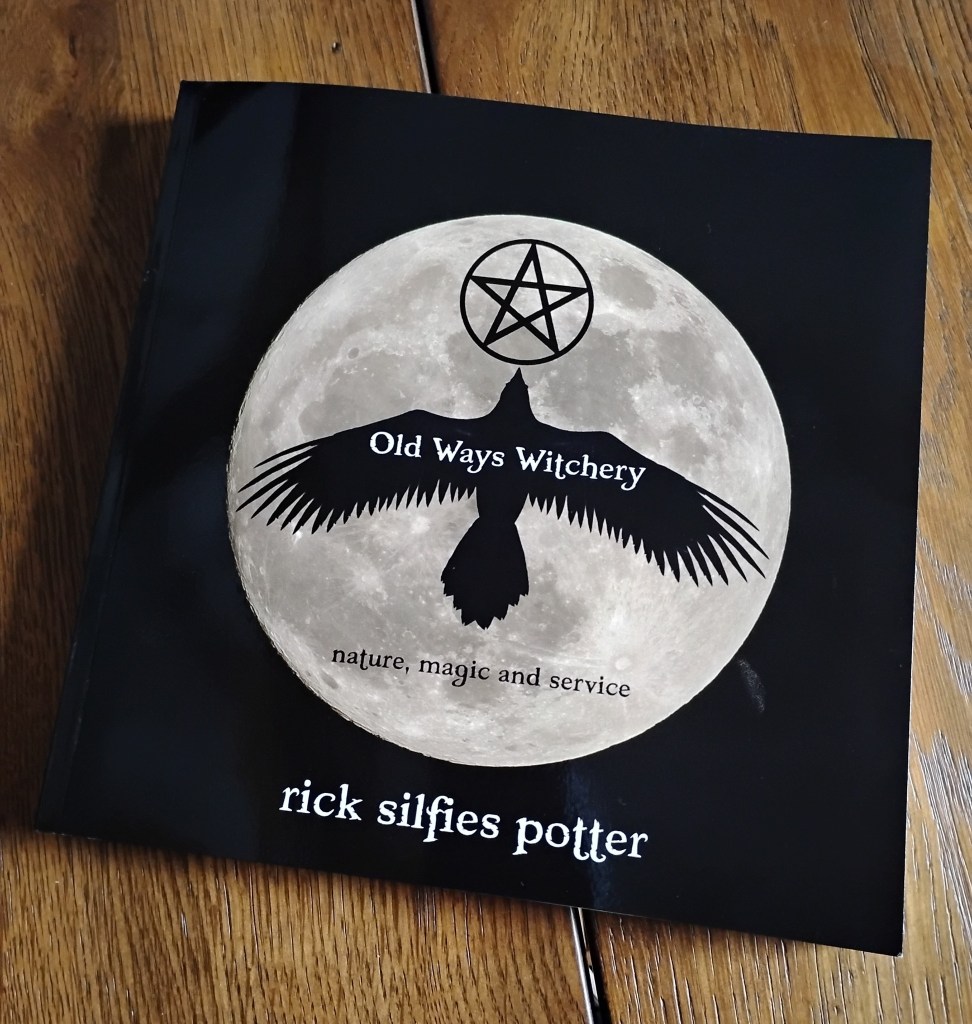
My latest book, “Old Ways Witchery: Nature, Magic and Service” contains the twelve monthly lessons that I have shared with private students for over a decade. Each lesson focuses on specific plants, stones and deity figures from the Irish, Scottish and Welsh pantheons. Also in each lesson you will find information on European folk magic, divination, spellcasting, druid philosophy and many other topics. The entire book contains wisdom I have gained from my own studies and meditations, and from teachers that I have had the privilege of meeting and studying with personally. Each lesson takes one month to complete, and includes homework and practical application. This book contains my own practice, and is presented exactly the way I practice it. I call it a “tradition”, as it is something I have passed on to my own students, but anyone can incorporate these lessons into their own practice. Each lesson is devoted to one month, beginning with March. My private lessons usually begin at this time, but those who have the book can begin at any time. It did take me quite awhile to format all of my lessons into one book. Time was scarce, as I still work a full-time job in the city and commute every day to the mountains where I live. Weekends are my writing times, since during the week I’m much too exhausted.

My definition of Old Ways includes beliefs and practices that pre-date modern magical systems such as Wicca. I present a blend of Witchcraft, Celtic Paganism, Druid Philosophy, Folk Magic, Occult Wisdom and other esoteric knowledge that has been passed down through the centuries. This may differ from other Old Ways traditions that have their own practices and rituals. Although the Old Ways themselves are not rooted in any one culture, they can have cultural elements. For instance, there are Italian Old Ways, Greek Old Ways and Celtic Old Ways. All of these pre-date modern magical practices. My practice happens to focus on the Celtic pantheon, with it’s associated imagery and lore.

Old Ways Witchery: Nature, Magic and Service is presented as a structured, monthly practice in twelve lessons. Get your copy now at this link.

The Ancient Art of Cord Magic

Cord Magic, or what some refer to as a “Witch’s Ladder”, is a very old practice of witchcraft that consists of knotted cords. As each knot is tied into the cord, an incantation is spoken to seal the spell into the cord. Many witches will tie feathers, bones, charms or magical trinkets into the knots. At the tying of the last knot, all the energy is directed into the cord and it’s knots. The power has been raised and is now stored in these knots in the cord. Different traditions of witchcraft use varying numbers of knots, and for various kinds of magic. Cords are usually made of string, yarn, twine, and sometimes animal or human hair. The oldest documented witch’s ladder was recorded in the year 1878, when one was found in a hidden room of an old house in Shropshire, England. It had been knotted with black hen feathers and was believed to have been used with malevolent intentions. Further investigations found that this was a common practice among local witches. As a reminder, witchcraft is neutral, being neither good nor evil, and it is the intention of the witch that is key. In this tradition of Old Ways Witchery, we use the witch’s ladder for healing, protection and other beneficial purposes. Evidence of sacred knotted cords exists from the Stone Age. See below the diagram of a witch’s ladder consisting of nine knots, along with an incantation for each knot. This can be applied to any spell you wish to cast. Choose the color according to your goal-example: red for relationships, green for prosperity, black for protection, white for healing. Examine your motives and intentions, as the final knot will set the spell in motion. Place the completed cord where it will not be disturbed.

You will notice in the preceding diagram that the knots are not tied in a straight line down the cord. The first knot is tied at one end, the second knot at the other, the third knot in the center, and then alternately according to the diagram below until the last knot is tied. In many witch shops you may see witch’s ladders that have crystals, plants and other items knotted within the cord. These are all quite beautiful and effective, however, in our tradition of Old Ways Witchery, simple knots with incantations are all that is necessary.

The Elemental Year

In magical terms, the year can be divided into four segments, each corresponding to a different element. As we examine these different times of the year, we can see how the energies present during seasonal shifts can be associated with the elements of Earth, Fire, Air and Water.

EARTH: March/April/May

It is during this time that the earth is beginning to awaken. Flowers are blooming, leaves are forming on the trees, and the creatures of the earth are arising from their slumber. Winter is but a memory, and the Earth is coming alive once again. In March, we celebrate the Spring Equinox with symbols of fertility and the newness of life. It is a time to start fresh and welcome new beginnings. Many magical traditions begin training new students at this time. In May, we celebrate Beltane, a joining together of energies to create something new, whether that be a creative project, a new relationship or the manifestation of a spell. The seeds have been planted, literally and figuratively, and now is the time to watch them grow. Beltane also brings with it the intensity and passion that carries over into the next few months.

FIRE: June/July/August

The Summer brings heat and warmth, and a powerful time of creative energy. The Summer Solstice is a recognition of that powerful force, but also a reminder that the days will soon grow shorter. Although Summer has just begun, the growing cornfields remind us it will soon pass. We spend these days enjoying the company of friends and loved ones, with lively cookouts and trips to the beach. It is a time to revel in the sunlight and enjoy all that life has to offer. Magically it is a time of fruition, of watching the plans we set in motion months ago finally coming to pass. Embrace the fire within, embrace your desires and passions, and visualize them manifesting in your life. On August 1st, we celebrate Lughnasadh, the First Harvest. Summer is nearly over, the corn has grown tall in the fields. Now is the time to begin preparing, for darker days are soon to come. Examine what has been harvested in your own life, and gather those things that will help you remain strong as the colder months arrive.

AIR: September/October/November

As Fall approaches, the winds begin to blow, reminding us again of the darkness ahead. In September, we celebrate the Autumn Equinox. The day and night are of equal length, but now the days will grow shorter. It is a time to give thanks for the abundance in our lives, for the food on our tables and the many good things that have come to us in the past year. As the mythical figure Mabon was rescued from darkness into light, we now transition from light into darkness. During these three months, many sense an increase in their intuitive and psychic abilities. As the wind blows, it seems to awaken the senses. Magic can be felt and sensed everywhere. This is the power of Air: enlightening, awakening, inspiring. In October, we celebrate Samhain as we remember our beloved dead. They draw near and whisper to us. As we enter the dark half of the year, we examine our own dark nature. We learn to embrace both the Dark and the Light. We recognize that both are necessary to us to be balanced and whole.

WATER: December/January/February

As the colder months arrive, they bring snow and sleet and freezing rain. Although the glistening white snow can be beautiful, this is still the darkest time of the year. The earth goes to sleep, and many of it’s creatures go into hibernation. The leaves have all fallen from the trees, leaving bare branches that sway in the winter rains. On the Winter Solstice, we acknowledge the darkness on the longest night of the year, but this brings with it the promise that light will soon return. The days will soon begin to grow longer. In February, we celebrate Imbolc in honor of the Celtic Goddess/Saint Brigid.

We light candles to her as a symbolic gesture that gently awakens her from her slumber. She is a goddess of smithcraft, poetry and healing. Her creative force will soon coax the snowdrops out of the ground and into the sunlight. As each snowfall melts into the ground, it waters the seeds that will soon sprout in the coming Spring.

The Cailleach, Crone of Winter

The Cailleach, a Scottish deity, is depicted as an old woman dressed in heavy grey plaid and carrying a blackthorn staff. She has blue skin and long white hair, and is sometimes described as having only one eye. She is the personification of Winter. In her legends, she herds deer, she fights the coming of Spring, and her blackthorn staff freezes the ground. She also has a few connections to the Irish goddess Brigid. Some interpretations say that the Cailleach turns to stone on Beltane and then reverts back to human form at Samhain. Similar to the Oak King and Holly King lore, the Cailleach is believed to rule the dark half of the year between Samhain and Beltane. Brigid takes possession of the blackthorn staff at Beltane and rules the light half of the year until Samhain, at which time the staff is returned to the Cailleach. The Festival of Brigid is also the day the Cailleach gathers her firewood for the rest of the winter. Legend has it that if she intends to make the winter last longer, she will make sure the weather on February 1st is sunny and warm, so she can gather plenty of firewood to keep herself warm in the coming months. As a result, people are generally relieved if the Festival of Brigid is a day of foul weather, as it means the Cailleach is asleep, will soon run out of firewood, and therefore winter is almost over. Early writings indicate that there may have existed a priest/esshood of the Cailleach, with followers who were solely dedicated to her. The Cailleach is known as the Crone of Winter, Lady of the Beasts, and the Seer and Foreteller of Doom. The word Cailleach also means “Witch” and “Screech Owl”.

In the tales of the Cailleach, there are some common themes:

  • She shapes the land.
  • She is associated with water, particularly wells, lakes and rivers.
  • She is the personification of Winter.
  • She manifests her presence in blizzards and winter storms.
  • She is ancient.
  • She is a guardian of animals, especially deer.
  • She can shape-shift into various forms, including maiden, heron and rock.
  • She can control the elements.
  • She can charm animals with her songs.

During the winter months, and particularly before the approach of snowstorm, offerings can be left out for the Cailleach. These can be stones such as clear quartz and amethyst, feathers, sweets, nuts and fruit.

Books, Teachers and Personal Gnosis

On a recent visit to a local bookstore, I found a table filled with books of witchcraft. I flipped through some of them, but found very few that I was really interested in. Most of them had the same information, but with each book presenting it in a modern, hipster sort of way. I left the store without buying any of them. I find this modernization and over-simplification of witchcraft to be rather disheartening.

I am extremely selective with the books I spend my money on, particularly books on witchcraft. I generally stay with authors and teachers that I know and trust. Since I am a witch of a certain age, there are several of them. I am not averse to new teachers, or even younger ones, but even they must have some connection to the way that I practice. I have learned that just because an author seems popular or has a large following, that they are not necessarily someone I should give my attention to. A few of these so-called “modern” witches have made broad sweeping statements that I simply cannot agree with. For example, one of these popular young authors said something along the lines of, “If you are a witch who is over 40 and you don’t have a mentor who is under 30, you’re going to miss out on the new trends in witchcraft and what modern witches are doing”. Another commented that he “can tell” who is a witch and who isn’t. This smacks of arrogant elitism and a “you’re not one of us” mentality which doesn’t sit well with me. You can’t always tell, and that’s not a bad thing.

I have ZERO interest in “what modern witches are doing”. And, since when was witchcraft meant to be trendy? I’m rather inclined to believe that this author’s book is popular not because of it’s content, but because of all the promotion and hype that preceded it. We need to be very careful of the authors and teachers we choose to follow, as several of them are popular for the wrong reasons.

I am more inclined to believe authors and teachers who share from their personal experiences, rather than someone who simply did research in order to write a book. Some of these researchers will discredit the work of other authors, especially if these other authors present information about a deity that is “not found in the lore”. The reality is a deity may share many things with a devoted follower that are not found in the lore. Lore and research are important, yes, but these alone will not tell us everything. There is some information we will only receive from our experiences and direct connection with a deity, plant, stone, etc. Some of this information is meant only for us, and some is meant to be shared so that others can make of it what they will. This is why comments like “That is not found in the lore” or “I’ve never heard that before” are not always trustworthy assessments on the validity of things we discover about gods, goddesses and magical pursuits.

I agree that unverified personal gnosis can be a slippery slope, but I have a bit of a problem with that word “unverified”. If you have a relationship with a deity, and that deity shares information with you (which should be happening anyway), then that information is not “unverified” because it was shared directly with you. Others may consider it unverified because it has not been documented in print somewhere. Will deities only share information that has been documented in print? I hardly think so. How does one verify unverified personal gnosis? Another factor to consider is our mental state. How do we know the information we are receiving isn’t just delusion and fantasy? A topic that is rarely discussed in magical circles is the importance of having a disciplined mind and control over our thoughts. The answer lies not only in our connection and experience with our gods and guides, but also in our ability to discern if information is coming from a spiritual source or from our own imaginations.

Two of my favorite teachers have each written a book that contains information they received through personal gnosis. Much of the information shared in these books is not found anywhere else. Because these are both highly respected teachers that I have met and whose work I trust, I am inclined to take their experiences as valid ones. One of them, sadly, has passed away in recent years, but they have both been around for decades.

When choosing pagan authors to learn from, look at their connection and personal experience with the material, rather than their academic achievements alone. There are very few who have both the scholarship and relationship. If you find one, more the better. Anyone can do research and write a book, but a pagan author who is really worth learning from will have that connection and experience.

That’s what it all comes down to.

Celebrating the Winter Solstice

The Winter Solstice occurs when half of the Earth is tilted farthest away from the Sun. The pagan celebration at this time (known in some magical traditions as ‘Yule’) goes back to as early as the 4th century. The Germanic-Saxons called it Jol, and the Scandinavians called it Jul. Both translate to the English word Yule. Ancient people were hunters and spent most of their time outdoors. The seasons and weather played a very important part in their lives. Because of this many ancient people had a great reverence for the sun. Midwinter was celebrated with bonfires, ale and storytelling.

The ancient Romans also held a festival to celebrate the rebirth of the year. Saturnalia ran for seven days from the 17th of December. It was a time when the ordinary rules were turned upside down. Men dressed as women and masters dressed as servants. The festival also involved decorating houses with greenery, lighting candles, holding processions and giving presents.

The Winter Solstice falls on the shortest day of the year (around 21st December) and was celebrated in Britain long before the arrival of Christianity. The Druids would cut the mistletoe that grew on the oak tree and give it as a blessing. Oaks were seen as sacred and the winter fruit of the mistletoe was a symbol of life in the dark winter months. It is believed that it was also the Norse who began the tradition of the Yule Log, although they likely did not refer to it as such. The earliest recorded mention of a ‘yule log’ was in the year 1686. The log was lit to conquer the darkness, banish evil spirits and bring luck for the coming year. Many of these customs are still followed today. They have been incorporated into the Christian and secular celebrations of Christmas. According to some traditions, it must come from one’s own land or be a gift, and it must not be purchased. It is traditionally ignited with the remaining piece of last year’s Yule log. This way, the light is passed on from one year to another. The Yule log is to burn slowly for 12 days in the fireplace, before it is extinguished. The ashes are stowed away and in springtime mixed with seeds and brought out on the fields. In this way the power of the Sun, symbolized in the Yule log, is distributed over the land. The rest of the wood is kept until next year to ignite the new log.

In this darkest time of the year we celebrate the return of the Sun, who will bring warmth, light and life back to the Earth. In the Druid tradition the name of this holiday is “Alban Arthan”, Welsh for “Light of Winter”. According to an older and more poetic interpretation, the name is “Alban Arthuan”, meaning “Light of Arthur”. In this poetical image, Arthur is symbolized by the Sun. The Sun dies and is reborn, just as the mythical Arthur is sleeping deep inside a mountain and will wake up again when the people needs his help. Alban Arthan, the Winter Solstice, takes place every year on the 21st or 22nd of December. We know today that the Sun will return, because the course of the Sun and the other planets in our system have been scientifically explored. Our ancestors did not take the return of the Sun for granted, and in addition they were suffering much more under the hardships of severe winter weather than we do today. For an agricultural society, whose survival depended mostly on crops, the return of the Sun was not just a matter of celebration, it was rather a matter of life or death.

In the Blackthorn Order, it is not only the sun that is acknowledged, but also the longest night of the year. We take advantage of these dark hours to examine our own darkness, exploring areas of our lives that need more light. We must also recognize the darkness of the world, and send light to those places on our planet that are struggling the most due to war, famine and disease.

At this time of year, the house is decorated with evergreen branches. Plants that remained green all year were symbols of fertility and the continuance of life. In the Irish tradition, a house decorated with greenery is expected to offer a place of rest to nature spirits fleeing from cold and darkness. The plants of the season are mistletoe and holly, as well as all evergreen plants, such as spruce, fir, and pine.

Every Winter Solstice, I do a private ceremony at home. This always includes a tarot reading to get insight into the coming year. On the Winter Solstice of 2022, I used seven cards. I found that seven cards provided far too many references to pinpoint specific events and times. This year, 2023, I will use only four cards, one for each season. I think four cards will help to nail down potential events to those four three-month periods. When doing this kind of reading, it is important to understand that what you see in the cards may not always apply to your personal life, but also to events happening in the world, events that may directly affect you.

As you celebrate the Winter Solstice, may you learn from the darkness as you await the return of the light.

Celebrating Lughnasadh

Of all the Celtic Gods, Lugh was one of the most beloved. He was the “Shining One”, according to some versions, a son of Mannanan MacLir, and skilled in all the arts. He was called Lugh Lamfada (“of the long arm”) and Samildanach (meaning “skilled in all the arts”). He was a beautiful child with golden hair like the sun. He is portrayed as handsome and youthful. Tailtiu was the Goddess of Sovereignty, the queen of the Fir Bolg and his foster mother. She lived on the Hill of Tara, where she taught Lugh, helping him to learn about history, poetry, music and everything he would need to learn to be a well-rounded and powerful leader. When Lugh became an adult, he tried to enter the court of King Nuada (NOOa-ha). Just as everyone was sitting down to feast. The gatekeeper challenged Lugh to tell his name and of his skill. For no one without a special art or skill may enter Tara.
“I am a smith”, said Lugh.
“We already have a smith”, said the gatekeeper. “Why would we need another?”
“I am a warrior”, said Lugh.
“We have no need of one”, laughed the gatekeeper, “Ogma is our champion”.
“I am a harpist”, said Lugh.
“We have a harpist”, said the gatekeeper, “and quite a good one at that”.
“I am a hero” said Lugh, “renowned for skillfulness rather than mere strength”.
“All of the gods are heroes”, the porter shook his head at Lughs persistence.
“I am a poet and a tale-teller from the land of apples, rich in swans & yew trees” said Lugh.
“Taliesin is the greatest poet in Ireland”, said the gatekeeper, “Why would we need you?”
“I am a cup-bearer”, said Lugh. “We already have nine of them”, said the porter.
“I am a worker in bronze”, said Lugh.

“We have no need of you. We already have a worker in bronze”, said the gatekeeper.
“I am an historian, a doctor, and a magician”, Lugh told him.
The gatekeeper responded, “We already have men skilled in all these things. I dont see why we would need your services”.
“But do you have anyone who is master of all of these crafts at once?” Lugh asked.
The gatekeeper had to admit that they did not, and invited him in. Lugh entered and sat down upon a chair kept for the wisest man. The champion, Ogma was showing off his strength by pushing around a large flagstone. The stone, as huge as it was, was only a portion broken from a still greater rock. Lugh picked it up in his hands and put it back in its place. The king asked him to play the harp. Lugh played the sleep-tune and the king and all his court fell asleep until the same time the next day. Next Lugh played a lamenting tune and they all wept, and then he played a song which brought them joy. When the king saw all these talents he gave the throne to Lugh for thirteen days. Lugh became the leader of the Tuatha De Danann.
Lugh’s foster mother Tailtiu died of exhaustion after working hard to clear the lands of Ireland for farming. Lugh was so fond of her that he held a festival in her memory. People would gather around bonfires, sharing stories and food. They would compete in contests of skill and strength. Lugh invented ball games and horse races for all to play. It was said that as long as these traditions continued there would be corn and milk in every house, peace and fine weather for the feast. Tailtiu became the Goddess of the Harvest, like Ceres to the Romans, and Corn Mother to Native Americans. She looked on as her children played and feasted. The festival of Lughnasadh is still celebrated in memory of Lugh the Sun King, and his beloved Foster Mother and Teacher; Tailtiu.

Lughnasadh (Festival of Lugh) is the first of three harvest festivals, traditionally celebrated on August 1st. In Irish Gaelic, and a slightly different spelling, Lunasa is the word for August. In the Christianized version, it is called Lammas (meaning Loaf-Mass or the Feast of Bread, at which time the first loaves of the season were blessed by the church). The hot days of August are now upon us, much of the earth is dry and parched, but we still know that the bright reds and yellows of the harvest season are just around the corner. Apples are beginning to ripen in the trees, our summer vegetables have been picked, corn is tall and green, waiting for us to come gather the bounty of the crop fields. Now is the time to begin enjoying the fruits of our labors, both on the table and in our lives. We honor this holiday to celebrate the first harvest, and the Celtic God Lugh, the sacrificed King of the Grain. Grain has held a place of importance in civilization back nearly to the beginning of time. Grain became associated with the cycle of death and rebirth. In early Ireland, it was a bad idea to harvest your grain any time before Lughnasadh — it meant that the previous year’s harvest had run out early, and that was a serious failing in agricultural communities. However, on August 1, the first sheafs of grain were cut by the farmer, and by nightfall his wife had made the first loaves of bread of the season.

Lughnasadh is a day of honoring Lugh, the Celtic craftsman god. He is a god of many skills, and was honored in various aspects by societies both in the British Isles and in Europe. Lughnasadh is still celebrated in many parts of the world today, and his influence appears in the names of several European towns. In our modern world, it’s often easy to forget the trials and tribulations our ancestors had to endure. For us, if we need a loaf of bread, we simply drive over to the local grocery store and buy a few bags of prepackaged bread. If we run out, it’s no big deal, we just go and get more. When our ancestors lived, hundreds and thousands of years ago, the harvesting and processing of grain was crucial. We honor our ancestors and the hard work they had to do in order to survive. This is a good time to give thanks for the abundance we have in our lives, and to be grateful for the food on our tables. As we enjoy nature’s abundance, what can we give in return? Lughnasadh is a time of transformation, of rebirth and new beginnings. Because of its association with Lugh, The Many-Skilled One, Lughnasadh is also a time to celebrate talents, skills and craftsmanship. What are your talents and gifts? How can you share those talents and gifts with others? Now is the time of year to work on developing your own talents. Learn a new craft, or get better at an old one. Start a creative project, write a book, play a musical instrument, sing a song, dance, paint. Learn a new magical skill, such as the reading of runes or the making of candles. Whatever you choose to do, this is the right season for thankfulness and sharing.