The Magic of John Dee

Photo: Wikipedia

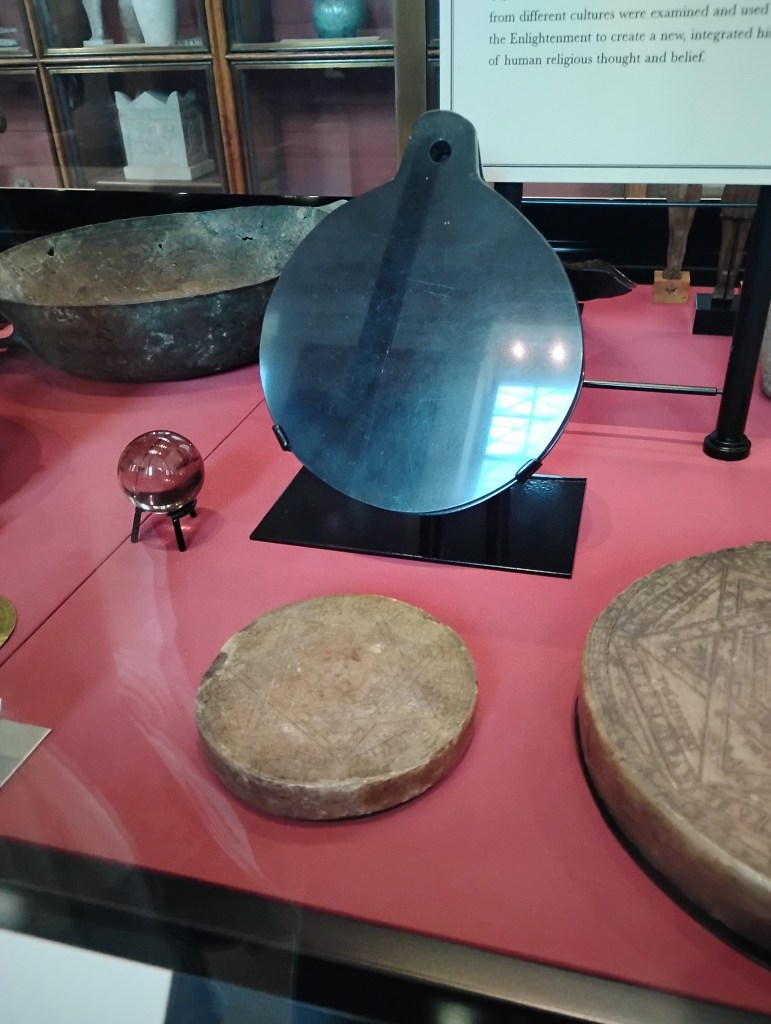
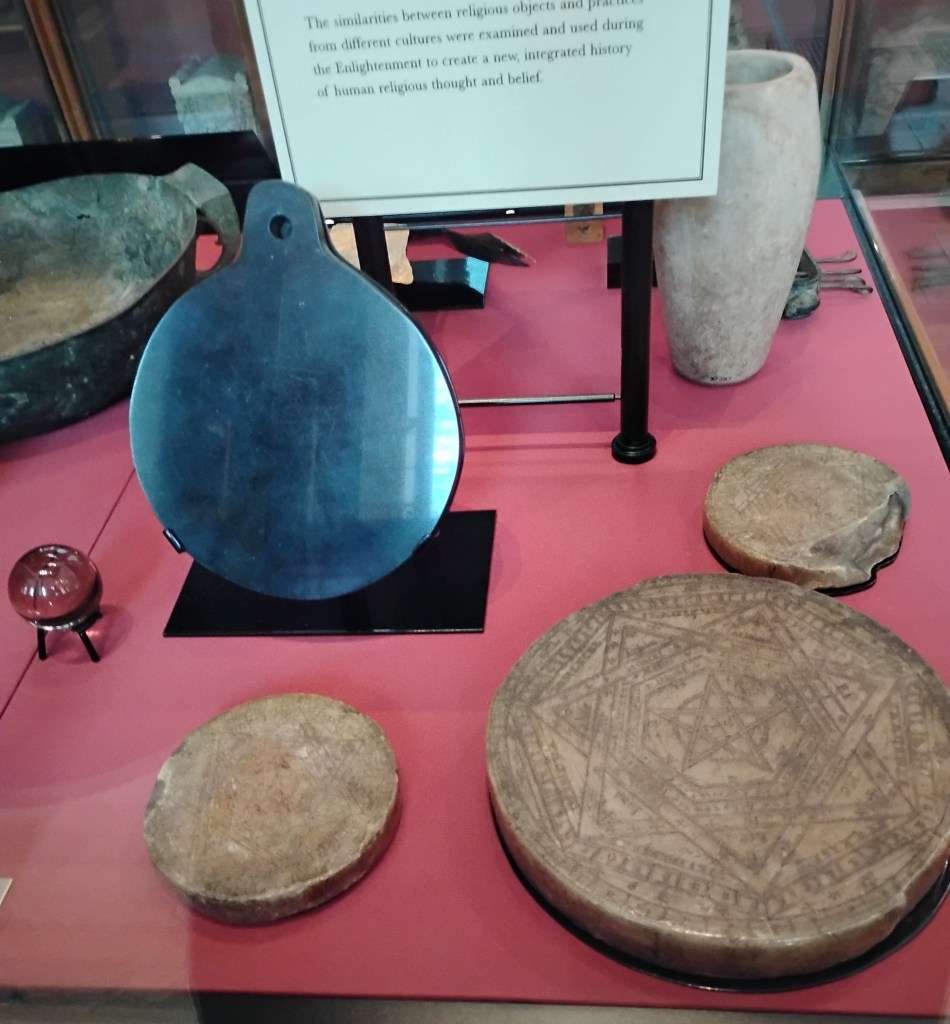
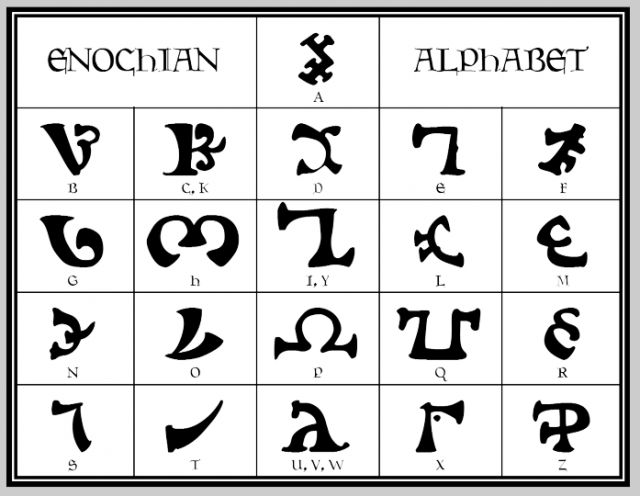
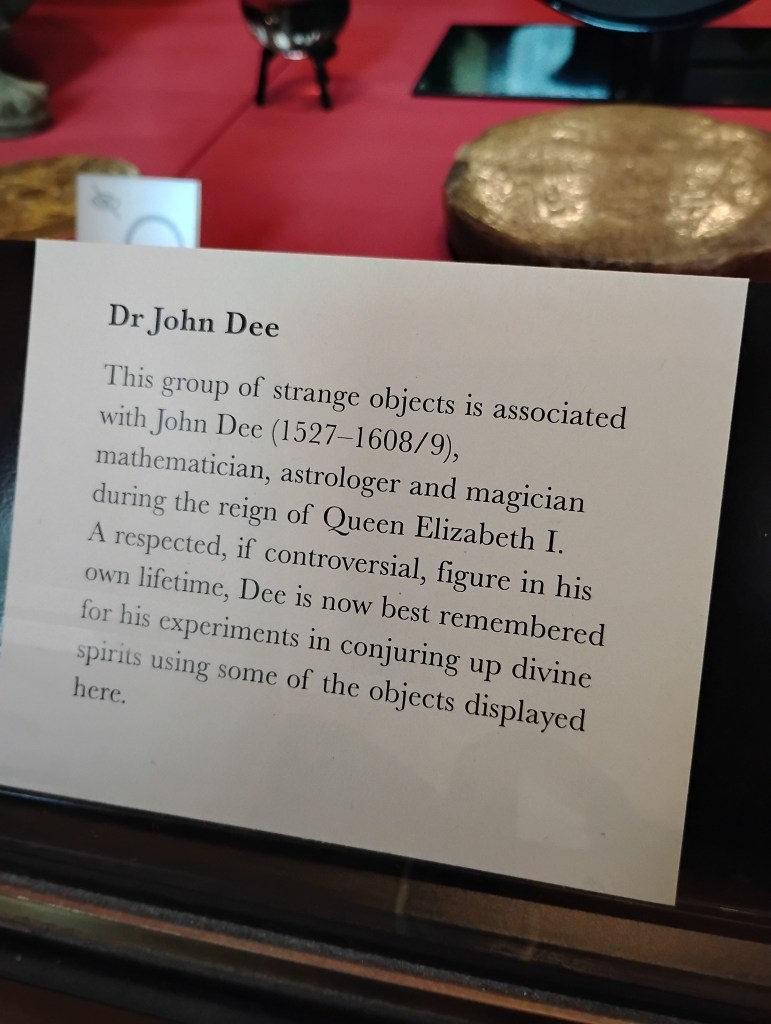
On a recent visit to London, I went to the British Museum, where I was able to get a close-up look at magical artifacts that once belonged to John Dee. He lived from 1527 to around 1609, and was the court astrologer to Queen Elizabeth I. He was a student of the occult, practicing divination, sorcery, numerology and the hermetic arts. He was also an alchemist and had one of the largest libraries in England. He is credited with writing the Monas Hieroglyphica (still available today), a work that contains a magical glyph believed to express the unity of all creation. In his other works, he and his assistant Edward Kelley divined what they believed to be an angelic language, which came to be known as ‘Enochian’. Dee was particularly drawn to angelic beings and spent much of his time in practices to communicate with them. This was done through the use of a black obsidian scrying mirror, and crystal ball placed on a wax tablet inscribed with magical symbols. These rare items are, of course, sealed inside a glass case at the British Museum, but I was still able to get quite close to them and take a few photos. While I have no personal interest in angels, I am more interested in Dee’s ideas about magic and divination. He did keep diaries which are still accessible today, and I am anxious to have a look at them. ‘Enochian’ is another of those magical languages that must be deciphered, much like the Theban alphabet, runes or ogham. Some witches use these languages to write spells or label certain magical oils or other items, as they are only known to the esoteric folk who recognize them. If you have the opportunity to visit the British Museum, you can view the items belonging to John Dee in the Enlightenment Gallery on the first floor. This gallery has many other magical artifacts from various cultures on display. It was quite a thrilling experience to be so close to these items that were once in the hands of John Dee himself.

The Monas Hieroglyphica (below)

The Ancient Art of Reading Candle Wax

Reading the shapes in melted candle wax, also called Ceromancy, is a very old art, with connections going back to the ancient Celts and Romans. As with many forms of divination, this practice relies heavily on intuition and symbolism. As I have shared in other articles, the word Divination is derived from divine, suggesting that the wisdom obtained through these methods originates from a divine source.

One simple method is to place a pillar candle on a white heat-safe plate. A dinner plate is fine, although it should be plain white with no designs, as a plate with different colors and designs could make symbols harder to read. The candle itself can be any color and should be placed directly on the center of the plate, and not in a holder. As the candle wax melts, it can drip down the sides and run along the surface of the plate, forming shapes. As your candle melts, it may take on a different shape. You can read the shapes and symbols as they are formed, or wait until the candle has completely burned down and then do the reading. Here are a few things to look for:

  • Mountains: These represent obstacles and challenges.
  • Hooks: Achieving a goal after a period of struggle. It is a call to “hold on” and be patient.
  • Swirly patterns: A spiritual awakening or realization.
  • Bubbles: These can represent suppressed anger, anxiety or other hidden emotions.
  • Waterfalls: These can have many meanings, so intuition is key here. Waterfalls are symbols of cleansing, or a need for cleansing and removing all that is harmful, but also of prosperity and material gain.
  • Tears: Sadness, sorrow or pain.
  • Crown or cylinder: This occurs when the wax melts directly down the center of the candle and leaves only the outer edges. This is symbolic of protection and success. On the flip side, it can also represent a person or situation being not as it appears.

When doing a candle wax reading, it is important to notice letters and numbers formed in the wax, as these often represent people and situations one will soon encounter. Animal shapes may also be formed, so a study of the spiritual meanings of various animals can be helpful. Birds are usually good signs, while snakes typically represent malevolent energies at work. Keeping in mind, however, that animal spirituality can be subjective, since some find snakes and spiders to be positive symbols while others do not. What do the animal shapes you see mean to you?

Another method of reading candle wax is to drip the wax into a clear glass bowl. For this method, you will use a taper candle and hold it above the bowl, carefully allowing the wax to drip into the bowl. Be careful not to move the bowl or disturb the water. Allow the dripping wax to fall into the bowl and harden. Set a time limit for dripping the wax (three minutes is good). The symbols as described above will mean the same, however, there are additional things to look for.

  • Observe how the wax moves through the water. Clockwise movements indicate good and beneficial things, counter-clockwise indicates harm and conflict.
  • Look for recognizable shapes, letters or numbers.
  • Wax that gathers close to the center of the bowl refers to things that have already happened but are affecting your life now.
  • Wax that gathers around the edges of the bowl refers to situations that will soon be happening.

Before doing a candle wax reading, it is important to decide what kind of answers you are looking for. Perhaps you need a solution to a problem you are having, or you need insight into an important decision you have to make, or maybe you just want a glimpse into your future.

There are some who will move the taper candle slowly in a clockwise circular motion over the bowl as the wax drips. Others will hold the candle still and steady over the bowl. Choose what works best for you.

Candle wax reading will take some practice, but with time and patience you can become proficient at it.

Good luck!

The Magic Within

Everyone has magical potential. Some are aware of their own magic, and have a natural predisposition for it, while others have simply not yet awakened to their inherent magical selves. Many have untapped divination skills or psychic abilities. Everyone has at least one kind of healing ability. One of the roles of the witch is to bring healing and restoration, and witches have a duty to be channels for healing. Many become skilled in alternative healing therapies such as Reiki, Aromatherapy, Herbology or Meditation. There are others who have unconventional methods of healing that they did not learn from a teacher or a book. It is not always necessary to have degrees or certificates to be a channel for healing. Spend some time in meditation and explore what your personal healing gifts may be. Sometimes you may discover them unexpectedly.

It is important to recognize that as witches, we ourselves are not healers. We are merely healing facilitators, allowing the divine to channel healing energy through us. It is not always obvious what is happening. When we embrace our friends and loved ones, we share healing energy with one another. This healing energy comes from a divine source, the divine that exists within us all.

The first step along the path of witchcraft is to develop a regular meditation practice. This is the art of using consciousness-altering methods to awaken the senses and develop inner growth. Eastern forms often involve chanting, drumming, controlled-breathing techniques, chakra healing, self-awareness, clearing the mind and becoming one with the moment. Western forms are more goal-oriented, and include visualization and affirmations.

It is vital to examine both the light and dark aspects of your personality, and integrate a healthy balance of both. Meditation has benefits that are not always immediately apparent. A regular meditation practice increases your intuitive and psychic skills, and helps you become more sensitive to the subtle energies around you. As you spend more time in meditation, your magical awareness will greatly increase, and you may begin to sense things about the people around you. You may even begin to have an awareness of unseen entities or spirit beings. While meditating it is helpful to light a candle and some incense, as this lowers the brain waves into a meditative state known as Alpha. The Alpha brain wave state is a daydream-like state of awareness, where one is relaxed, yet still aware. It has been proven in studies that the Alpha state enhances creativity and learning abilities, and it is believed to make one more open to receive psychic information. One can achieve the Alpha state through simple breathing exercises.

Creative Visualization is the practice of using your imagination, will and emotions to manifest change in your life, and is a very important component in practical magic. If you can visualize your desired goal as though it has already happened, your spells will manifest much faster.

Another benefit of a regular meditation practice is the development of psychic gifts. When we say someone is psychic, what does that really mean? A person who is psychic has the ability to receive knowledge about people or events without the use of the regular five senses (taste, touch, smell, sight, hearing). This is why we say they have a “sixth sense”. Some psychics seem able to turn on their gifts at will, but for many, psychic information usually comes unbidden. It is a sudden knowing, a sudden awareness of information that has arrived in your consciousness. There are a number of psychic gifts, and each of them mimic the five senses in some way. I prefer to call them “gifts” rather than “abilities”, as the word ’ability’ implies that it can be activated at will, and this is not always the case. A person who is psychic may be gifted in one or more of the following:

Clairsentience: A sudden awareness of information about a person or event without the use of the five senses.

Clairvoyance: Seeing a person, or an event taking place, when this person or event is not in your general vicinity. This may occur in the mind’s eye of the psychic, or may manifest as a full vision.

Clairaudience: A person who is clairaudient can hear things, (such as voices, music, footsteps or other sounds), that others around them do not hear. The origin of the sound could be in the astral realm, or it could be a great distance away.

Clairolfactance: This occurs when someone becomes aware of an odor or aroma that has no obvious source. The scent usually has some connection to a past or future event, a specific place or person. The scent may be from a location one has visited in the past, and possibly a sign that you will visit that place again very soon. This is a rather curious gift, as it activates the mind’s ability to associate specific scents with places and people.

Clairgustance: A sudden taste or flavor in the mouth that does not come from a physical source. This is usually a sign of a future event or may be linked to an event taking place a distance away.

As you develop your intuitive skills, it is a good idea to start experimenting with several forms of divination, until you find the ones that are right for you. Divination is the art of obtaining information through the use of various tools, such as tarot cards, runes or scrying mirrors. There are several kinds of divination, and many people find they are more adept at some forms than others. The word Divination comes from the word Divine, meaning that the information we receive through these practices is imparted to us as we connect to the divine source within. Some of the more common divination practices are:

Tarot: A standard tarot deck contains 78 cards, which is divided into two sections, the Major Arcana and Minor Arcana. (The word Arcana is the plural of Arcanum, which means “profound secret”). The 22 cards of the Major Arcana are the heart of the deck, as each one symbolizes some universal aspect of human experience. Each card in the Major Arcana has a name and number, along with associated imagery. Some names convey a card’s meaning directly, such as Strength and Justice. Other cards portray individuals who personify a particular approach to life, such as the Hierophant and the Empress. The names of these individuals vary depending on the deck you use. There are other cards with astrological names, such as the Star and the Moon. They represent the esoteric forces linked to these planetary bodies. The 56 cards of the Minor Arcana are divided into four suits: Wands, Cups, Swords and Pentacles. Each of these suits stands for a particular approach to life. Each tarot card is filled with symbolism and imagery that can help the reader awaken his/her intuition and decipher its meaning in relation to other cards in the reading. Readings from tarot decks can address any area of life, from health and relationships to career and romance. There are many tarot decks available on the market, the most popular being the Rider-Waite deck.

Oracle: Oracle decks can contain any number of cards, and tend to focus primarily on spiritual growth and inner development, though they can, at times, address issues of everyday life. They are not as difficult to learn as tarot, which is why some people prefer them. Each oracle deck usually has a specific theme that sets the overall tone of the entire deck. Oracle decks call on the energies of herbs, crystals, animals and similar metaphysical themes.

Runes: The origin of the Runes is shrouded in mystery, although we do know they are powerfully connected to the ancient Norse people. According to Norse legend, the god Odin was a god of wisdom, cunning, sorcery and death. To impart to his children the gift of writing, he hung himself upside-down on the World Tree, sacrificing himself for his people on the giant ash Yggdrasil. After nine days of fasting, he fell from the tree and was granted with the knowledge of the secrets of the Runes. It is believed that they began as an alphabetic system, but have become much more than that. Each Rune symbol contains within it a specific energy that can be used in divination, spellcraft or other magical workings. While there are a few different types of Runes, such as the Witch’s Runes and Anglo-Saxon Runes, the most prominent (and most ancient) Runes are the Elder Futhark Runes. The Elder Futhark contains 24 different runes, and were originally carved onto small bits of wood. Today you can find runes that are carved into various crystals, wood, resin or bone. Many folks like to make their own, by cutting a tree branch into small pieces and using a wood-burning tool to carve in the symbols. Making them yourself is preferable, but is not a requirement for them to work. In the magical community, there are many Runecasters, (those who specialize in Rune Divination), and offer Rune readings to the public. Most Metaphysical/New Age/Wicca shops carry runes in many varieties. Keep your Runes together in a drawstring pouch made of a natural fiber, such as cotton, wool or silk. There are special rune pouches available online, and even rune cloths with special markings to assist in your readings, but these are not necessary.

Scrying: This is the art of obtaining information, wisdom or guidance by gazing into a crystal ball, a bowl of water, or a mirror. Many witches own at least one scrying mirror and a crystal ball. Some may see actual images form on the surface of the object used for scrying, while others receive impressions within their consciousness. The best times to practice scrying seem to be during “between-times”, such as a Full Moon, New Moon, a Lunar/Solar Eclipse, Dawn/Dusk, or during Beltane (May 1st) or Samhain (October 31st).

There are many other forms of divination. It is a fascinating study and practice. It should be understood that while many of our magickal gifts come from a divine source, we also have an energy system that runs through our bodies. This system moves along various ‘energy centers’ known as Chakras. There are many chakras points in the body, even in the hands and feet, but the seven primary chakras are located along the spine. When the chakras are open, we are able to conduct our lives in a healthy and spiritually balanced manner. If one of more of the chakras are closed, or “blocked”, this often results in physical problems, emotional issues or hindrances to inner growth. The word “Chakra” is a Sanskrit word that means “spinning wheel” or “vortex of energy”. Each of the chakras are linked to a color, and to specific issues concerning life, health and spirituality. Let’s examine the seven primary chakras:

Root Chakra (Red): Located at the base of the spine, the Root Chakra is associated with life on the material plane. Things such as finances, money, survival, job security, and home are all related to this chakra. It represents foundation and groundedness.

Sacral Chakra (Orange): Located just below the navel, the Sacral Chakra is associated with sexuality, the sense of well-being and interactions with others. It represents our connection to the people around us and our ability to adapt to new experiences.

Solar Plexus (Yellow): Located in the belly area, the Solar Plexus is associated with self-esteem, personal identity, confidence, and ego. This chakra seems to be where we sense the most powerful flow of energy. It represents our ability to be confident and in control of our lives.

Heart Chakra (Green): Located in the center of the chest, the Heart chakra is associated with love, friendship, romance, close relationships, family, joy and kinship with those around us. It represents our ability to give and receive love.

Throat Chakra (Blue): Located at the throat, the Throat Chakra is associated with communication, self-expression, will and truth. It represents our ability to communicate.

Third Eye Chakra (Indigo): Located at the center of the forehead, the Third Eye Chakra is associated with intuitive and psychic abilities, imagination, decision-making, divination, shamanism, and the Sowilo rune. It represents seeing the unseen, walking between the worlds, and your magical identity.

Crown Chakra (Violet or White): Located just above the top of the head, the Crown chakra is associated with spirituality and one’s connection to the divine. It represents the mind of Spirit and deity, as it is revealed through us and within us.

Each of us are born with inherent magical gifts and skills that are just waiting to be coaxed out and developed. We all have the ability to connect with the forces of Nature and the Universe to bring about change and transformation. Magic is not necessarily supernatural. It is a natural part of who we are, yet there are many who have not become aware of this truth. Meditation is the first key to opening the doors of magic in your life. Through meditation, introspection and self-awareness, along with the development of your magical skills, you become more attuned to the divine within, and your magical identity will begin to shine through.

Divining with the Pendulum

Most people prefer to use a pendulum with the same hand they write with. Personally, I don’t think it really matters which hand you use. I happen to be left-handed, but my own pendulum seems to work better when I use it with my right hand. You may wish to practice with both hands and see which works better for you. If you are sitting down, rest your elbow on a table and hold the chain of your pendulum between your thumb and first finger. The palm of your hand should be facing downward, and the pendulum should be hanging about a foot in front of you. If you are standing, the best position is to have an angle of 90 degrees at the elbow, so that your forearm is parallel to the ground.

Getting Started

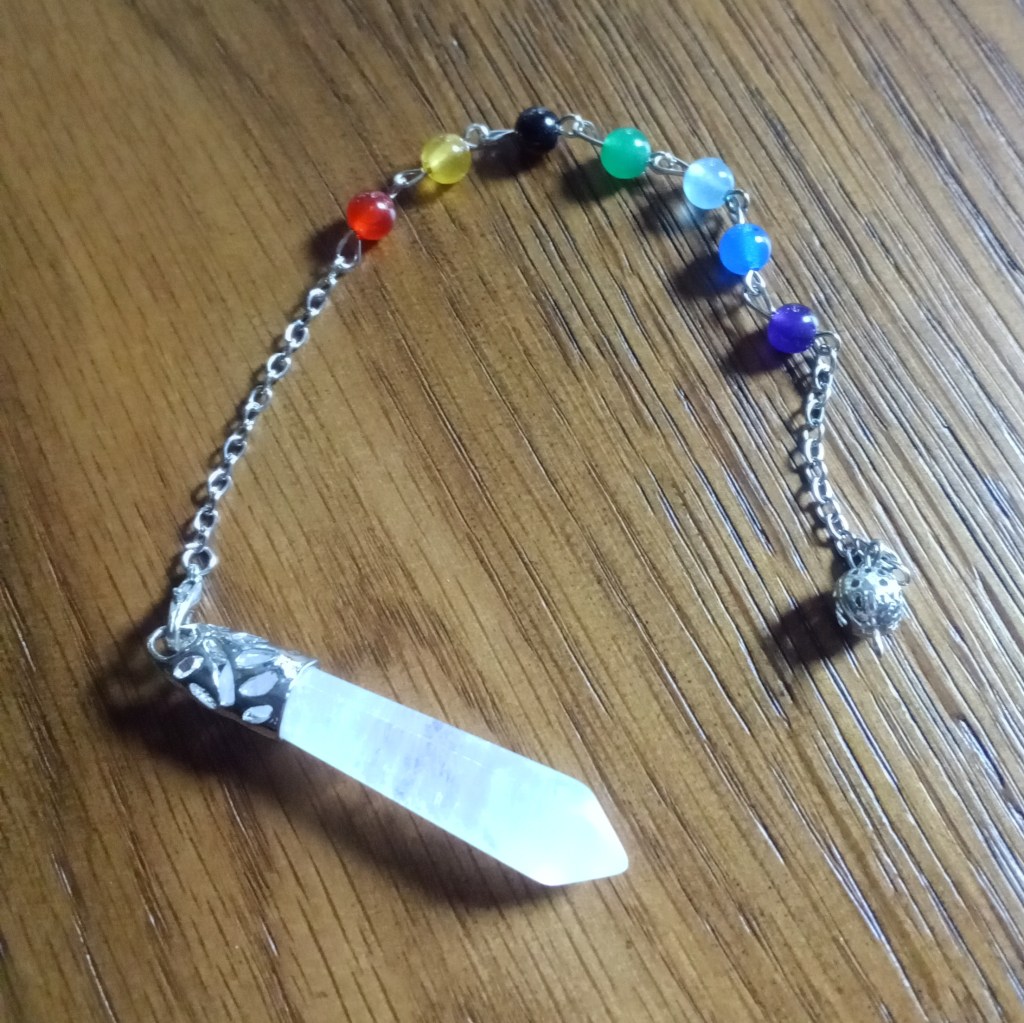
Hold the pendulum in front of you and allow it to swing in a clockwise motion. Then swing the pendulum gently back and forth to become familiar with the movement. Allow the pendulum to swing in different directions. Deliberately swing the pendulum in gentle circles. When the pendulum is still, ask it which movement indicates a “Yes” or ‘positive’ response. It may take time for the pendulum to move. Be patient. Then ask it to indicate a “No” or ‘negative’ response. Many people use the pendulum to help locate lost objects, determine a best course of action or to answer “yes or no” questions. There are helpful pendulum charts, cloths and boards, but these are not necessary for the pendulum to work. Preferred pendulums are made of wood or from crystals and stones. Some believe pendulums made of conductor materials like silver, copper or brass should not be used. Those made of quartz crystal seem to be most effective, as this stone is easily “programmed” with intention and stores magical energy quite well. My own pendulum is made of a quartz that seems to glow in the light, and I am always astounded by it’s accuracy. When you find a pendulum you like, it is important that you do not treat it as a trivial object. Regard it as a sacred, divine tool. When not using it, keep it in a pouch made of natural fiber, and do not allow anyone else to touch or use it. Your pendulum will attune to your energy, so you must keep it safe and away from the hands of others.

How It Works

The unconscious, involuntary movements of the hand holding the pendulum cause it to move. The subconscious mind of the person holding the pendulum causes the muscles to react unconsciously. The pendulum amplifies responses that would otherwise be too small to notice. Consequently, the answers are coming from your connection to the Divine Mind. The pendulum gives us access to our subconscious minds. The subconscious mind accesses the Divine Mind that contains all knowledge. The pendulum accesses our subconscious minds, which in turn taps into the Divine Mind, and the pendulum gives us the answer we seek. When using the pendulum, it is best to be in a meditative Alpha state. This will make it easier to access the subconscious. Watch for the gentle “pull” of the pendulum guiding you to the answer you seek.

Practice

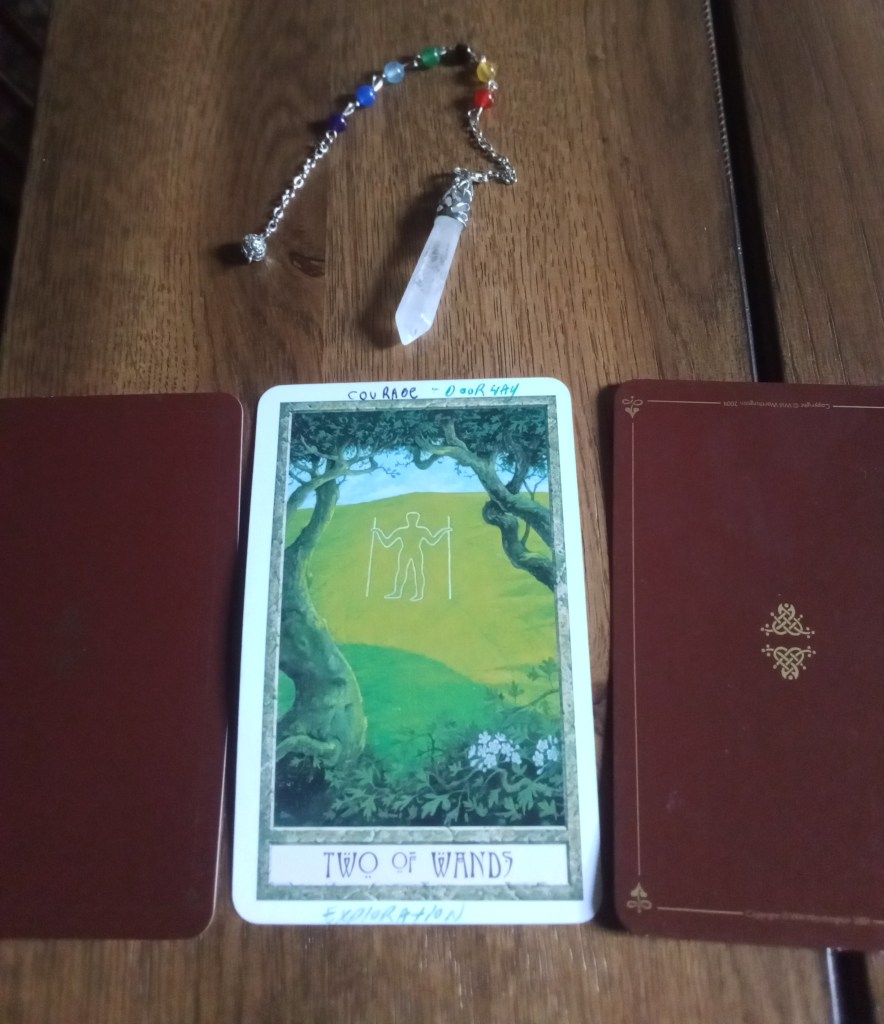
One of the best ways to develop your skills with the pendulum is with the use of tarot cards. Choose five random cards from any tarot deck. Look at them to see what they are and write them down. Turn all five cards face down, and then close your eyes and shuffle them so that you don’t know which card is which. Place them all face down in front of you. You will be asking the pendulum to locate each specific card, one at a time. Let’s say you know that one of the five cards is the Two of Wands. Hover the pendulum a few inches above each card and ask “Is this card the Two of Wands?

This is where it gets tricky. It is important to take your time and not to rush this process. Patience is necessary here. It took me awhile to realize what was happening, and I was pleasantly shocked when I first saw it.

Hover your pendulum still (in other words, don’t move it in circles or anything like that), over each card for about 10 to 20 seconds. Keep your focus on the card you’re looking for, in this case, the Two of Wands. Watch the pendulum very closely for subtle movements. There will be no movement at all, or very little movement over the incorrect cards. As you approach the correct card, the pendulum may start to vibrate or move in small circles. It sometimes does this over the incorrect cards as well, but movements over the correct card will be more defined. Continue hovering the pendulum a few inches above each card while observing any movement. The pendulum needs to “read” each card before it can choose the one you’re looking for. Go from left to right, then right to left, and continue this until you begin to see a pattern. As you move from one card to the next, you will eventually begin to see the pendulum being pulled slightly to the left or the right. It will appear as if an invisible finger is gently directing it toward the correct card. This is exactly how it looks to me. The first time I did this experiment, the pendulum correctly identified all five cards. Since then, my pendulum has become one of my most powerful divinatory tools.

Healing with the Pendulum

Ask the person seeking healing to lie down, then hold the pendulum about 1 foot above the body, starting at the head. Scan the entire body from head to feet, while watching the movements of the pendulum for any irregularities. Ask the pendulum to indicate areas that need healing. There will be a slight pull of the pendulum toward unhealthy areas. Place the hand not holding the pendulum over these areas and visualize white light coming out of your hand and into the person’s body.

To send healing to someone who is not present, you will need a pendulum and two beeswax candles placed side by side about a foot apart. The candle on the left represents you, the candle on the right represents the person you wish to send healing to. Bring yourself into a meditative alpha state and visualize the other person as clearly as you can in your mind’s eye. Swing the pendulum back and forth slowly from one candle to the other in a continuous motion. Visualize healing being carried from the candle on the left (You) to the candle on the right (the other person). Do this until you intuitively feel the process is complete. Then, stop the swinging of the pendulum with the other hand. Blow out the left candle, then the right. Picture the other person fully restored to health.

Divination

The word ‘divination’ is derived from the word ‘divine’. This indicates that the practice of divination is empowered by a divine source. When we practice any form of divination, we are essentially calling on the divine to assist us through the chosen medium (such as a pendulum, crystal ball or tarot deck). In this light, it is not far-fetched that the pendulum is being guided by an unseen force.

The Lost Art of Tree Gazing

Divination by leaves and branches of trees, called Dendromancy, relies heavily on intuition and the inner voice. By observing the whispers of leaves, and the swaying of branches in the wind, the trees offer their wisdom for our personal growth. When tree gazing, it is best to approach them with open-ended questions rather than seeking a “yes-or-no” answer. Scientific studies suggest that trees communicate with each other through root systems and fungi under the earth, and through the air using pheromones and other chemicals. With a world-wide network of trees, many that are thousands of years old, they are believed to have developed a language of their own. They can also communicate with humans who have learned to listen.

Whenever a witch places their hands on a tree with the intention of healing and communication, the tree responds accordingly. An old word for witch is Pharmaceute, where we get the word pharmacist. This word denotes the witch as someone knowledgeable in the healing properties of flowers, plants and trees. The trees will nearly always recognize a pharmaceute, for they know you mean them no harm and your intentions are for the highest good. When tree gazing during the light half of the year (spring and summer), observe the sound and movements of the leaves and branches. During the dark half of the year, (fall and winter), observe the bare branches as they dance in the wind. You will find the energy feels different at different times of the year.

To begin tree gazing, you must first find the tree you wish to communicate with. You may have a favorite tree already, or you may wish to find a tree at a local park. Intuitively listen as you walk among the trees until you find one that “feels” friendly and receptive. Find a spot where can sit undisturbed near the tree for at least half an hour.

Next, close your eyes and take several deep breaths until you reach a meditative state. This will help make you more receptive to receive psychic information. Place your hands on the tree, and visualize white light coming out of your hands and into the tree. See the entire tree bathed in this healing white light. Project feelings of love and healing into it. Say to the tree, “Blessed tree, I come to seek your wisdom”, or “I seek your wisdom about...” then state your problem or issue. At this point you may keep your hands on the tree, or if you’re worried about getting looks from passers-by, sit as near to the tree as possible so you can observe it. Just as with most types of divination, the tree will impart information through impressions, images or feelings. Have a notepad and pen handy to jot down anything that comes to you. Do not stare at the tree, but let your gaze soften as you maintain an open, meditative state of mind. There are many things to take notice of as you observe the tree, such as:

  • What shapes or symbols do you see formed by the branches or leaves?
  • Are there any sounds coming from the tree? If the wind is blowing through the leaves, close your eyes and listen closely. What does the tree seem to be saying? Take note of your emotions. What are you feeling?
  • Is there any wildlife in or around the tree? Birds, insects and other animals all have their own unique wisdom. A bird building a nest could indicate that it’s time for you to start preparing for the future. Write down the animals see so you can explore their wisdom further at a later time.
  • Are there any plants growing on or near the tree? Mistletoe growing on an oak tree could suggest that you need to devote more time to spiritual practice. Write down all of the plants you see, and research their magical properties.
  • Is the tree near a body of water? If there are long branches extended over the water, take note of how it is reflected in the water below.

It is important not to be super-specific when tree gazing, as their wisdom seems to be more focused on personal growth and inner transformation, rather than “should I take this job” sort of questions. It may take some practice, but as the tree becomes more comfortable with you it will communicate more often. It is also good to know what kind of tree it is and any magical associations it may have. Consider the tree a friend, and it will respond in kind.

At the end of your tree gazing session, always leave it a gift. You can pour some spring water around it’s base, or leave some seeds, fertilizer or stones (Tree Agate, Clear Quarts or Aventurine are good choices). Thank the tree for sharing with you, and document your experience in a journal.