Deity and Devotion

I once read a Facebook post that said “Tonight we’re doing a ritual for protection. What god should we use?” This made me cringe a little, as the gods are not there to be “used”. This practitioner and others with them were planning to call on a random deity for assistance. Yes, there are deities that have protective qualities, but they are not meant to be evoked arbitrarily. Wouldn’t you rather be surrounded by those who have a genuine interest in you, instead of those you only hear from when they need something? I’m sure the deities feel the same way. Now, I know some folks have different ideas about who or what the deities are. Some just view them as archetypes, energies or thoughtforms. I happen to consider them as living, spiritual beings. I acknowledge numerous deities from the Celtic pantheon, primarily the Welsh Goddess Cerridwen. She is a Goddess of inspiration, creativity and transformation. She has a triple aspect as Witch, Goddess and Mother. I have been a devotee of Cerridwen for many years. We have a relationship. A devotee is someone who “devotes” themselves in service to another. Throughout the year, I also honor other Celtic deities in order to strengthen my relationships with them as well. They are not merely aquaintances or strangers I call upon only when I want something. We have an established connection. I have been to many rituals where a practitioner evoked a deity they only learned about hours earlier, and then expected that deity to be present and lend it’s energies to the ceremony. I can guarantee that did not happen. Eclectics might disagree, as this seems to be a common practice, however, I am not eclectic. Buffet style paganism isn’t for me, and I have always questioned it’s authenticity.

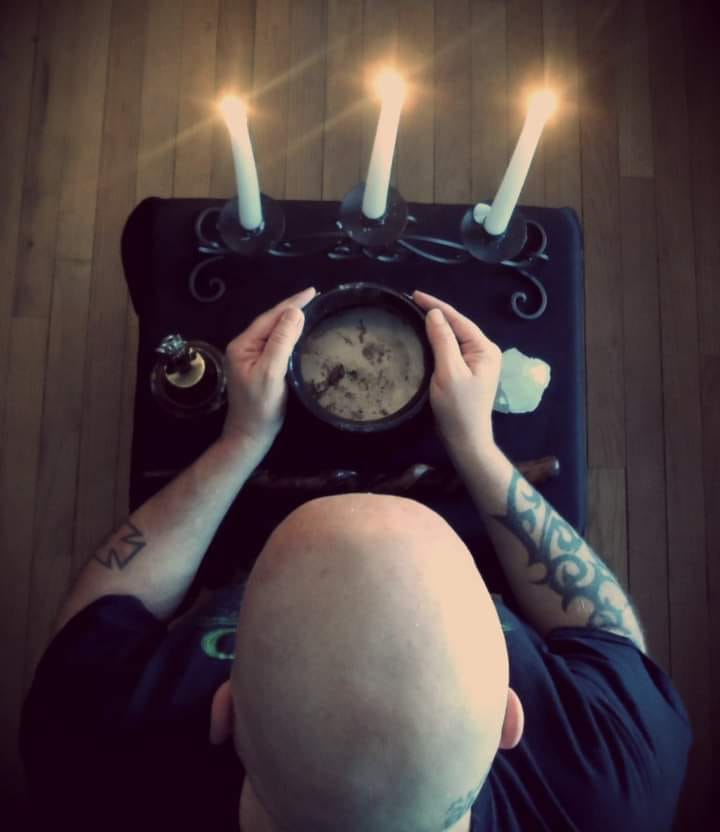
So what does it mean to be a devotee to a deity? It means spending time with that deity on a regular basis. Not just to ask for something, but get to know them, as you would learn about someone you just met. Introduce yourself, talk to them, tell them the things you admire about them. Study their lore and stories, which will give clues to their likes, dislikes and things they will respond to. Light candles for them, sing to them and burn incense as an offering. Do rituals that simply honor who they are and the things they represent. Place a statue or photo of them on your altar. When your deities see that you take them seriously, then they will do the same for you. Offerings are important. Offer to them the things they enjoy, but also offer your time and skills in service to them. Learn more about them from other devotees. For example, Cerridwen’s story is full of hidden wisdom, but I have learned a great deal more about her from other devotees who have written books about their own experiences. All of this helps to draw me closer to her. Draw close to your deities, and they will draw close to you. A relationship is a two-way street. Once that has been established then you can start asking for things.

Ideally, they should be things that deity can provide. Cerridwen is a goddess of creativity and inspiration, so I ask for those things to help in my own life situations. Other deities such as Cernunnos and the Morrigan, will assist in other areas as long as I continue my connection with them. That is how it works. If you never do anything for them, how can you expect them to do things for you? Set aside time for devotionals to your deities. Some do them every day, others will do them a few times a week, but make your devotionals a regular practice. Make time for them and they will make time for you. If you don’t have an altar, now is the time to create one. This will be your sacred space to interact with your gods and guides. They are waiting to meet you there. So please, don’t call on random deities for assistance. Develop a relationship with them first, and then they will be there for you.
Benefits of a Structured Practice

I have encountered many pagans who have a practice that seems rather chaotic and random, with no rhyme or reason, and approach it with a sort of casual “whatever I feel like today” attitude. There is no discipline or consistency to their practice. Many become “Eclectic” witches, because they don’t want to be limited to one particular system or pantheon. This buffet-style paganism seems to work for some, but leaves others feeling their energies scattered and ungrounded.

My practice has remained largely unchanged for the last ten years, but it is still just as vibrant and alive as ever, because it is based on connection and relationship. While it is very structured, it still allows room for growth. I will share my practice with you, and give suggestions on how to develop your own. In the meantime, consider the following:

  • What deity figures, gods and goddesses do you feel the strongest connection with?
  • Which crystals and stones do you use most often?
  • What flowers, herbs and plants, if any, are the most important to your personal practice?
  • Consider your magical skills. Perhaps you’re a tarot reader or a Reiki practitioner. Would you like to develop these skills further?

Below is a brief outline of my yearly practice. You will see that even though it has organization and structure, there is room for growth and versatility. I have strong connections to the Celtic current and it’s magical systems, so this is what I work with exclusively. You may choose to work with others of your choice. I present this only as an example, so that you can use it as a template for your own personal practice.

January

  • Deity: Cu Chulainn
  • Plant: Valerian
  • Stone: Citrine
  • Weekly Divinations
  • Rituals: Full Moon and New Moon
  • Reading and Study
  • Meditation

February

  • Deity: Brigid
  • Plant: Hyssop
  • Stone: Rose Quartz
  • Weekly Divinations
  • Rituals: Imbolc, Full Moon/New Moon
  • Make Brigid’s Cross for altar
  • Reading and Study (Tending Brigid’s Flame by Lunaea Weatherstone)
  • Meditation

March

  • Deities: Cerridwen and Taliesin
  • Plant: Blackthorn
  • Stone: Green Aventurine
  • Weekly Divinations
  • Rituals: Spring Equinox, Full Moon/New Moon
  • Crafting and Consecrating a New Wand
  • Reading and Study (Mabinogion, Cerridwen by Kristoffer Hughes)
  • Meditation

April

  • Deities: Dian Cehct and Airmid
  • Plant: Mandrake
  • Stone: Moonstone
  • Weekly Divinations
  • Rituals: Full Moon/New Moon
  • Reading and Study
  • Meditation

May

  • Deity: Cernunnos/Herne/Green Man
  • Plant: Sage
  • Stone: Clear Quartz
  • Weekly Divinations
  • Rituals: Beltane, Full Moon/New Moon
  • Make a new batch of Personal Oil
  • Reading and Study (Three Cauldrons of Poesy)
  • Meditation

June

  • Deity: Manaanan Mac Lir
  • Plant: Lavender
  • Stone: Amethyst
  • Weekly Divinations
  • Rituals: Summer Solstice, Full Moon/New Moon
  • Visit to Peace Valley Lavender Farm
  • Make a new Crane Bag
  • Astral Projection/Psychic Travel Exercise
  • Reading and Study
  • Meditation

July

  • Deity: Rhiannon
  • Plant: Marigold
  • Stone: Lapis Lazuli
  • Weekly Divinations
  • Rituals: Full Moon/New Moon
  • Reading and Study (The Song of Amergin)
  • Meditation

August

  • Deity: Lugh
  • Plant: Yarrow
  • Stone: Tree Agate
  • Weekly Divinations
  • Rituals: Lughnasadh, Full Moon/New Moon
  • Re-dedicate skills and abilities to Cerridwen and Community
  • Craft new Protection Amulets and Talismans
  • Dragon Magic
  • Reading and Study
  • Meditation

September

  • Deity: Mabon
  • Plant: Cinquefoil
  • Stone: Selenite
  • Weekly Divinations
  • Rituals: Autumn Equinox, Full Moon/New Moon
  • Reading and Study (Mabon story from The Mabinogion)
  • Meditation

October

  • Deity: Morrigan
  • Plant: Wormwood
  • Stone: Black Obsidian
  • Weekly Divinations
  • Rituals: Samhain, Full Moon/New Moon
  • Craft a new Ancestor Bottle
  • Craft a new batch of Ancestor Incense
  • Reading and Study (Celtic Lore and Spellcraft of the Dark Goddess, by Stephanie Woodfield)
  • Meditation

November

  • Deity: Dagda
  • Plant: Mugwort
  • Stone: Hematite
  • Weekly Divinations
  • Rituals: Full Moon/New Moon
  • Reading and Study
  • Meditations

December

  • Deity: Cailleach
  • Plant: Mistletoe
  • Stone: Snowflake Obsidian
  • Weekly Divinations
  • Rituals: Winter Solstice, Full Moon/New Moon
  • Craft a new Silver Branch
  • Reading and Study
  • Meditations

This is not an exhaustive list of everything I do each month, there are other more specific things I could have added, but I did not want to make it too confusing. As you can see, there is room to be flexible on various things, such as study material or forms of divination. I typically use tarot, oracles, pendulum and crystal ball. I practice various forms of meditation, including chant and creative visualization. There are certain things I do at specific times of the year, such as wand making in the spring and protection talismans in the summer. Add practices that are meaningful to you in your own yearly devotionals.

By working with the same deities, plants and stones on a consistent basis, you develop a stronger connection to them. You can use this same format to choose which of these you will focus on each month. Many people have one specific deity they are closest to, and for me that is Cerridwen. I acknowledge her in all of my rituals and her statue is on my altar year round, but there are other deities I draw near to each month as well. It is my hope that sharing my yearly practice will help others develop their own. You will find that a structured practice such as this will be more meaningful than one that is scattered and disorganized. After all, you will be working with the deities, plants and stones that you have the strongest connection to, and learning more about them each month. Discipline and consistency are key elements to developing strong relationships with our magical allies.